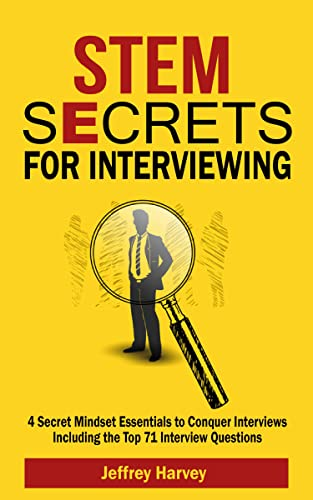
Book Review: “STEM Secrets for Interviewing” by Jeffrey Harvey

Rating: 3 stars

Headline: For the right reader there is some merit in having a quick flick through this guide

Review:

STEM Secrets for Interviewing by Jeffrey Harvey is an informative guide aimed at prospective job candidates, particularly those applying for roles within the fields of Science, Technology, Engineering and Mathematics (otherwise known as STEM subjects).

In an ever-changing world, Harvey argues that being proficient in academia is no longer a golden ticket to a high-flying career. Split across ten chapters, this guide explains some of the core employment competencies and guidance on how to answer related questions that could be posed at interview.

Harvey’s book is certainly extensive; with seventy-one different questions covered in a great amount of depth, readers are hardly left wanting from a lack of information. The content cleverly utilises real world case studies to highlight the damaging effect of negative core competencies in industry (for example the fatal design flaws in the Boeing 737 Max aircraft caused, in part, by a company mantra instilled into employees to put profitability before safety).

Where this book slightly loses sight of its aims is where the breadth of knowledge becomes more a weakness than a strength. To be somewhat blunt, the book is too long for its intended purpose. Harvey introduces this book as being something made for those applying for their first STEM role, possibly their first interview of any kind. With that in mind, we are to assume the target readership age is somewhere in the low to mid-twenties. When I was that age, I wanted a no-nonsense guide following a simple structure: interview question, model answer, interview question, model answer. What job applicants do not generally have time for are dense blocks of paragraph, including an introduction to the history of STEM subjects. Given the title of the book and the intended audience, this felt like needless words. The book needed to get to the point and much quicker.

Another point is the numbering of the questions. To state in the opener that chapter eight would outline seventy-one questions, only to then chunk them up into categories so that the question number never exceeds five, it makes it incredibly hard to refer back to a specific question.

There is some merit to this book and for the right reader possibly worthy of a quick flick through. Could I say it was more than that? That is probably another question to add to Harvey’s list.

AEB Reviews

Links:

Reedsy Discovery Review: AEB Reviews – “STEM Secrets for Interviewing”

Purchase Link: “STEM Secrets for Interviewing” by Jeffrey Harvey (Amazon)

**

Could you spare a dollar? Donate here!

Alice’s Funding Page

**

Shin-kicking – a very Cotswold news story

Nothing sums up my experiences growing up than the hype surrounding the “Cotswold Olimpick Games”, an annual summer event that takes place on Dover’s Hill, Gloucestershire.

You, however, might be more familiar with one of the key events that take place during the games, skin-kicking.

Not heard of shin-kicking before? Well have no fear, for this news clip from BBC Points West will explain all in glorious local news fashion.

(Even I was left thinking “what did I just watch?”)

There’s a lot to unpack here in what is almost a 4 minute long video, so let me hit you with what’s going on (my personal highlights are in bold):

  • 00:12 – It’s not a piece of old reel footage unless a random horse suddenly appears
  • 00:29 – What. On. Earth? (I choked on my cup of tea when I first saw this)
  • 00:41 – Local news gets interviewee’s name wrong (#standard)
  • 01:29 – “It’s a part of our heritage that’s nice to keep alive” – in school we were frequently told that it was a stupid sport and told to not do it
  • 01:40 – Already looking considerably more violent than the 1950s version of shin-kicking
  • 02:08 – I genuinely feel a bit sorry for anyone who travels overseas, or makes special effort, to visit the Cotswold Olmpicks. My sister went last year and said it was a load of cr*p
  • 02:35 – Dear Lord, those shin guards! (I couldn’t stop laughing…again). Also, the buttoning up of the suit jacket which I’m guessing is a nervous twitch on the part of the presenter, as if this bloke is seriously going to pelt him
  • 02:44 – “Be careful, because I am a world champion” is a phrase that has probably become very tiresome down Mike’s local pub
  • 02:50 – Demonstration of shin-kicking (otherwise known by Alice’s laugh of “hahahahahaha! This is brilliant, hahaha”)
  • 03:01 – “Do you normally have something down your trousers?”
  • 03:15 – I’m starting to think someone has dared Mike to wear that silly hat
  • 03:35 – The weather presenter completely baffled, like the rest of us, by what he’s just seen

And don’t you worry, as always you’re very much welcome.

**

Could you spare a dollar to support me? Donate here!

Alice’s Funding Page

**

Book Review: “A History of Lithuanian Writers in the United Kingdom” by Aldona Grupas

Rating: 5 stars

Headline: Providing a spotlight on Lithuanian writers, this is a book I would love to have displayed on my bookshelf

Review:

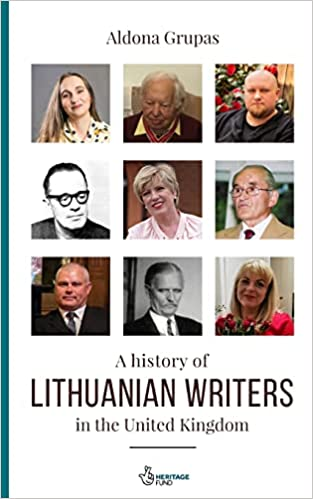
As a born and bred British citizen, I simply could not help myself when the opportunity arose for me to review Aldona Grupas’s recent release A History of Lithuanian Writers in the United Kingdom (Hereafter A History of Lithuanian Writers). Before reading her work I did a cautionary bit of research online, discovering that in 2021 there were approximately 153,000 Lithuanians calling the United Kingdom home. For context, this is around the same population size as the Warwickshire town of Stratford-Upon-Avon (birthplace of William Shakespeare and, coincidentally, close to where I grew up as a child). From that you quickly understand the mindset which birthed this book, a thriving community with something to say and a determination to be recognised for it.

The book details nine Lithuanian writers, past and present, and how their work has contributed towards shaping prose and poetry within their native Eastern European country and in Britain. Each standalone chapter features an extract from each author’s portfolio of work, alongside a biography. The biographies are just as fascinating as the writing, highlighting the social and political factors which influenced their creative approach. At 88 pages it is a short and sweet read, easily digestible in one sitting.

In her introduction Grupas talks about A History of Lithuanian Writers being a passion project. It shows; you can tell a lot of effort, research and careful selection has gone into this title’s production. The quality of the translations alone are worthy of a five-star rating alone. Reading some of the beautiful poetry it is easy to be left in awe and wonder over creatives that are vastly unheard of within British literature.

A History of Lithuanian Writers is a delightful book, merging fact and fiction seamlessly. Grupas and those who have contributed should feel incredibly proud of their hard work and efforts. It samples a diverse range of talent in a way which leaves you begging for more. An important reminder of the importance of reading widely and broadly beyond borders, this is a book I would love to have displayed on my bookshelf. When it comes to understanding the world “Mokėti vieną kalbą neužtenka” (“knowing one language is not enough”).

AEB Reviews

Links:

Reedsy Discovery Review: AEB Reviews – “A History of Lithuanian Writers in the United Kingdom”

Purchase Link: “A History of Lithuanian Writers in the United Kingdom” (Amazon)

Author Website: https://albionartclub.co.uk/

**

Could you spare a dollar to support me? Donate here!

Alice’s Funding Page

**

Anna Beer on the female greats literature forgot

The evening before seeing historian and author Anna Beer I’m sat at home, drafting a book review. Most of my reviews are for self-published titles, books where authors need the extra push to help them up the rankings. This particular book is a self-help guide for women navigating the menopause. It’s really good, certainly one of the more informed guides I’ve read in recent months. I finish typing my conclusion, knowing I’ll return to this review at least twice more to make edits before uploading it onto Reedsy. In that moment life feels good.

Barely 24 hours later…

“If I have to read another book on the menopause I’ll throw it across the room!”

It’s a statement that says a lot about the personality of this speaker, a strange mix of fire and frustration blended with ease and informality. Anna Beer has made her entrance.

Beer’s newest publication, Eve Bites Back, puts forgotten female authors front and centre of her historical research. Women like Mary Elizabeth Bradon, who wrote Lady Audley’s Secret in 1861-2 as a serialised publication for sixpenny magazines. She wrote the first instalment in just one evening. Such as the power of her words, when her original publisher ceased trading, another stepped in to print the remainder of the book. Bradon was a household name of her time, a literary celebrity, yet for every hundred mentions of her contemporary Charles Dickens, nowadays you will struggle to find one of Bradon.

Beer pauses for breath, taking only the slightest sip of tap water from her glass. The plight of Bradon isn’t the body of Beer’s argument, quite the reverse, the historian is only just warming up.

Bradon’s fate is not only applicable to the female authors of books, Beer argues. Another example, the poet Emilia Lanier (née Aemilia Bassano) also spent a good portion of her life swimming in the same pool as other masterful contemporaries. A 16th Century creative living in London, Lanier would have known fully of the playwright William Shakespeare, it is believed she was even mixing in the same aristocratic circles as him (although less known about whether the pair ever met).

Lanier was 42 years old when she published Salve Deus Rex Judaeorum, a poetry collection highly praised by all genders, even with its undertones many would now regard as feminist leaning. And yet, once again, in the 21st Century relatively little is known of Lanier. Why? Because, Beer argues, Lanier simply didn’t have the same number of influential promoters as Shakespeare.

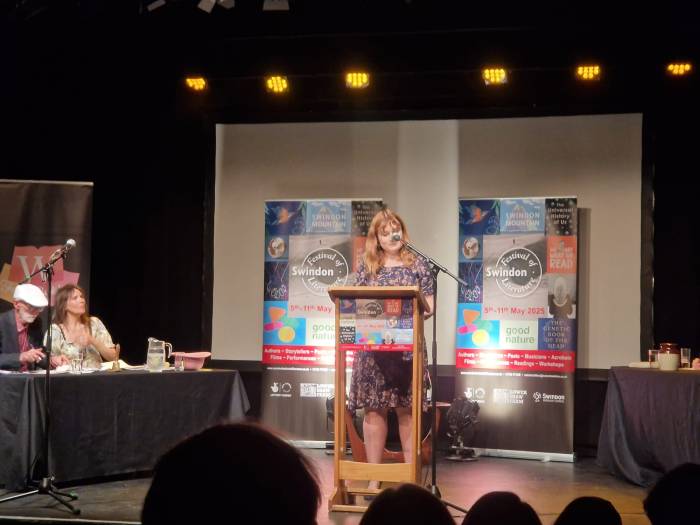
Beer smiles, one hand gripping the podium, the other pushing a strand of hair behind her ear. She’s hit her stride, that juicy zone when academics become unstoppable, overwhelming charisma tinged by a slight arrogance. They know they’re right and you can’t help but nod along. Beer rattles through woman after woman, their names piling up like endless bodies cast below the stage we sit before. If she carries on at this rate the whole auditorium will be drowned before the hour is finished.

“I must mention Lady Mary Montague,” she adds between breaths, “oh, and someone ask me about Anna Wickham if there’s time!”

Watching her recount all these unknown literary greats, it makes me both proud and embarrassed to be a woman. Society imprinted on me many of Britain’s literary greats, only now am I realising that all of them just so happened to be white men. If anything Beer’s work proves that there were more female authors out there than can be feasibly brushed under the carpet.

The evening draws to a close and with the round of applause comes a sudden longing for a fresh air. The auditorium at the Swindon Arts Centre empties and, not realising quite how hot I’d become inside, I’m relieved to be sucking in a large mouthful of cool spring air.

Within minutes of getting home my laptop is thrown open and a multitude of female names punched into my search engine. The internet crashes momentarily, I hit refresh multiple times, forcing it on until the algorithm finally caves in to my demands. The more I search the more I’m left wanting and by the end of the night I have an Amazon basket filled with books, not one of which written by a man.

To hear Beer talk so energetically on her book Eve Bites Back and wider literary feminism fills me with optimism for what this field of study can offer us all. Knowing that it took Jane Austen twenty years to convert her thoughts into a recognised publication is also enough to keep my own creative aspirations alive. (Although for what it’s worth, I won’t be forwarding Anna Beer a copy of my menopause book review anytime soon.)

Image credit: Wyvern Theatre

Previous Swindon Literary Event write ups from AEB:

**

Could you spare a dollar to support me? Donate here!

Alice’s Funding Page

**

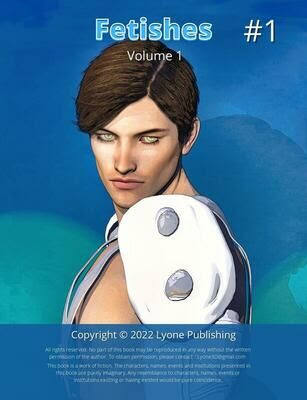
Graphic Novel Review: “Fetishes” by Lyone 3D

Rating: 2 stars

Headline: A hefty dose of Fetish-on-Fetish action, with illustrations that needed a lot more refinement

Review:

Fetishes by Lyone 3D is the first in a series of speculative graphic novels set a world where humanoids (or “fetishes”) have been created for the protection and entertainment of humans. A highly sort after commodity, the fetishes have become the valuable playthings of the rich and famous, with ownership limited to only the elite classes within society.

After a dancing contest featuring five attractive male fetishes, the nameless woman comes away having secured what the crowd have voted for as the most desirable. Renaming the fetish to Reiver, the female owner pushes her fetish’s programming to the absolute limits, accumulating in her enlisting Reiver into a fight organised by the wives of other fetishes. For over seven pages there is pure fetish on fetish action. Reiver ultimately fends off all his rivals and is taken back home by its owner, making no attempt to hide her disinterest in her fiancée as she takes Reiver, the fetish, to bed. While the fiancée may not outwardly seem to care about the well-being of his partner’s fetish, the look exchanged between him and Reiver suggests there could be more than meets the eye to this heterosexual slave robot/human owner relationship.

The biggest critic I have with this graphic novel is in the quality of the drawings. Imagery makes up 95% of what the story is trying to portray, yet time and time again the poor quality of the character faces becomes a major distraction. When the characters grin they portray a deathly haunting look, on the occasions where characters look direct at the reader (as is the case in the first scene involving pundits talking to camera), in these scenarios the profile views are more than disturbing. The proportions are all wrong.

I can see what the author/artist is trying to do with this story and with refinement it could potentially work. I would question some of the plot developments (some elements feel very rushed through), but given this is the first in a series the story arch could possibly get through with a three-star rating. The drawing standard however, that is something much harder to overlook and ultimately brings this review down to the two-stars that it is.

AEB Reviews

Links:

Reedsy Discovery Review: AEB Reviews – “Fetishes” by Lyone 3D

Purchase Link:

**

Could you spare a dollar to support me doing what I love? Donate here!

Alice’s Funding Page

**

Sunny days in Falmouth (Cornwall)

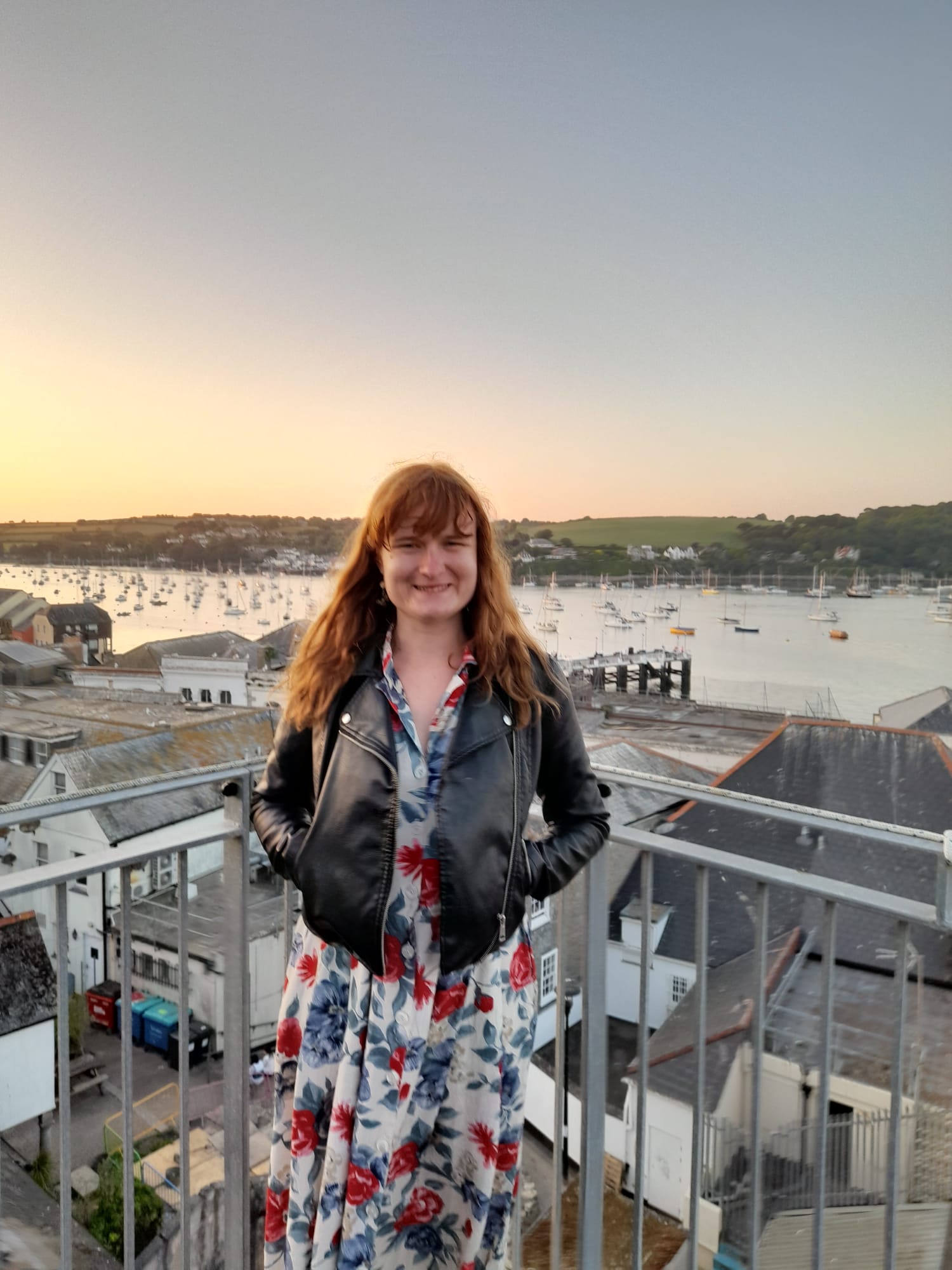
Just back after a week in the beautiful West Country town of Falmouth (Cornwall, UK).

Amazingly for Britain, we got (close to) a full week of blue skies and wall to wall sunshine* (*one day was a bit overcast, but we’ll overlook that for the sake of argument). I even got sunburnt! This was then followed by several days of jackets and cardigans to prevent me turning into a literal tomato.

Much gin, cyder and Cornish pasties were consumed and it was wonderful.

It just goes to show, when British holidays pull through, they really pull through.

**

Could you spare a dollar to support me? Donate here!

Alice’s Funding Page

**

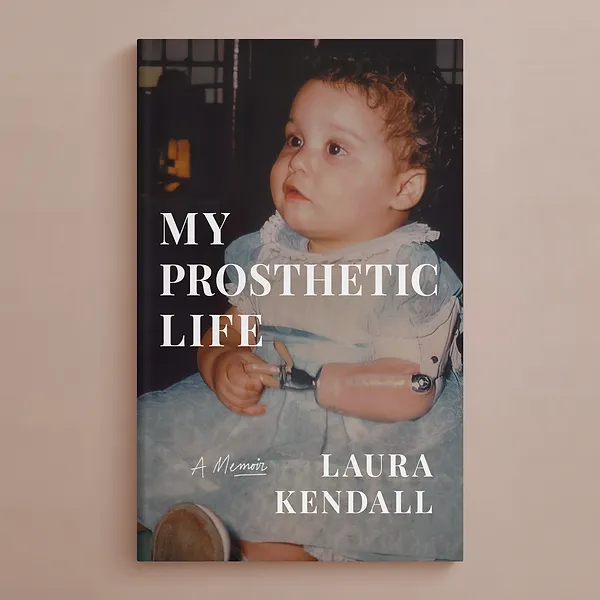
Book Review: “My Prosthetic Life” by Laura Kendall

Rating: 4 stars

Headline: A triumphant memoir celebrating the determination to succeed

Review:

The initial cursorily that drew me to Laura Kendall’s memoir My Prosthetic Life came admittedly at a level of crude intrigue, subconsciously seeking answers to the questions any able-bodied person would have in response to anyone who has grown up with of a prosthetic limb. “Do you resent the drugs companies who prescribed thalidomide to pregnant mothers?”, “what is it like to navigate airport security?”, “how do different prosthetic limbs compare, how do they operate day-to-day?” But as I dug deeper into this memoir I realised this title is so much more than that.

There is more to Kendall’s humanistic storytelling than cold metal and plastic, more to her than the clinical definition of her condition (phocomelia of the left arm). In this memoir there is instead a real sense of warmth and inclusion, with an approach to writing that is open, honest and candid in nature. She shares images of a joyful youth, coupled with the struggles of growing up in a highly conservative household and parental abandonment from the choices made in later life. Tales of love and laughter in lavish surroundings sit next to a deeply troubled scene of a failed attempt to commit suicide (prevented by the intervention of her husband). It really is a roller-coaster of emotions, transporting the reader on a journey that absorbs every element of Kendall’s life. You come away appreciating the challenges Kendall has overcome, with the hint of modesty that acknowledges there are things that could have done differently (a theme particularly present in her references to drug addiction and her role as a mother).

Some of the earlier chapters are pone to causing confusion, where Kendall’s chapter structuring moves readers a bit too briskly from recent experiences to childhood upbringing (and then back again). There is also a heavier focus on particular life stages versus others (personally I felt more could have been said on Kendall’s teenage years and the High School system). That said, this is an insightful read and nothing less than a case study on how, regardless of outward appearances, we are unified by the challenges we face.

AEB Reviews

Links:

Reedsy Discovery Review: AEB Reviews – “My Prosthetic Life” by Laura Kendall

Purchase Link: “My Prosthetic Life” by Laura Kendall (Amazon)

Author Website: https://www.laurakendallwriter.com/

**

Could you spare a dollar to support me doing what I love? Donate here!

Alice’s Funding Page

**

Rachel Parris: Throw yourself into the life you have and “bee kind”

I curse under my breath as I fumble my housekeys with sweaty fingertips, hair bun tumbling out in long strands. Despite best attempts to get away from work at 5, it’s now gone 6pm and I’m running hideously late. The sun beats down on my exposed neck as I barge my way into the house, laptop case bearing down on my slight wrist like a sack of cement.

I’m clambering up the stairs using what remaining hands and feet I have at my disposal. The primeval movement releases that niggling comment lodged at the back of my skull. “Alice, running late?” it says, “what’s new there?” I throw my laptop across my bedroom floor, coat myself in enough body spray to suffocate the voice and tumble back down the two flights of stairs. I charge out the front door, remembering to pull out the key as an afterthought.

I barely notice the bee. Fat and furry, dragging its belly across the hot tarmac and far too reoccupied to notice the broad foot-shaped shadow hovering above. I look at my watch, glance around, look at my watch again. It’s doubtful anyone will else will come to the aid of a sickly bee, especially on a territorial housing estate where Swindon’s answer to The Bridge is two neighbours fighting over who clears up the ceremonial cat deposits positioned between two adjoining houses.

I rub a hand across the back of my sweaty neck and sigh. From inside the footwell of my car, I retrieve a notebook and rip out a lined sheet. It’s a rip that causes several more pages to scatter, prized scraps of disjointed creative thought now dotted in as many places. I lunge to grab one, dart over to save another before it is run over by a car. I narrow my eyes at the bee, biting my bottom lip which now tastes more of salt than it does of lipstick.

I eventually get the bee onto a neighbouring hedge. I don’t know how, I just do. Chucking the now ailing orange notebook across the backseat of my car, I turn on the ignition. The engine is still warm, the news station no further along in its ankle deep coverage of the upcoming local elections. I’m rolling off my drive and heading out the estate.

And then the bee flies into my windscreen.

It’s unbelievable, pure head-first, comedy gold. Of all the places and directions, the first bee of the season has decided to fly into the windscreen of a bright blue Fiat 500. There are no words to describe it, which is probably why I burst into laughter. “Alice, trying to save a bee with a death wish? What’s new there?”

It’s this very bee that fills my thoughts as I’m listening to the comedian Rachel Parris discuss the pieces of audience advice, words that make the backbone of her publication debut, Advice from Strangers. “I don’t mean to be rude,” she says, “but if there’s one bit of advice that I really don’t like it’s #BeKind.” She makes an overstated hashtag sign with her fingers and the audience laughs. “It’s meaning seems to have gotten lost on social media and now everyone uses it in a really patronising way. In that sense guess you could say I ‘have beef with Be Kind.'”

Funny, I think, I seem to have beef with just a single bee.

Rachel lists of her favourite pieces of advice, ranging from “never pass up the opportunity for a wee” to the more cryptic, such as “don’t sleep with either of them” and “don’t go into the attic when drunk”. Taking these as a springboard, Parris uses the pieces of advice in her book to reflect and challenge wider debates in society, whilst also commenting on her experiences with miscarriage and becoming a mother. When asked by the audience for her own piece of advice to strangers Parris thinks, long and hard, before answering. “Throw yourself into the life which you have.”

Her presentation now hitting its stride, Parris takes multiple questions from the audience, firing responses back with the same sharp wit that helped shape her career. On recalling her experiences with the BBC, Parris recounts, “the producers were surprisingly open to some of the ideas we pitched. I don’t think any of us ever thought we’d get away with putting up a sign on screen that read ‘Boris Johnson is a liar and a racist’ and yet they did.” She laughs. “Yeah, that one was a bit of a victory.”

Parris’ authorship career in books might be in its infancy but it is clear it also has so much potential (should she even wish to continue with it – her aspiration of penning a Jane Austen musical will remain tough competition to any future works in progress). Feminist, comedian, presenter, mother and now author, with this many strings to her bow it’ll be fascinating to see where Rachel Parris goes next.

With a final round of applause the lights are brought up and people begin shuffling out of the stands. As I make my way out to the Swindon Arts Centre my thoughts turn to the bee on my driveway. For all the frustration it caused me, I still hope it was able to get over the shock of hitting my car and fly to safety. “Maybe I’ll plant something in my garden,” I think, “in case he comes back.”

As I’m driving home I develop my own piece of advice, one for me and me alone. No matter what life throws at you (or your car windscreen), bee kind.

Image credit: The Scotsman

Advice from Strangers is available to buy from any number of places where book things are sold

Previous Swindon Literary Event write ups from AEB:

**

Could you spare a dollar to support me? Donate here!

Alice’s Funding Page

**
Book Review: “Buckhead Road and Other Horror Shorts” by Adam Nestor

Rating: 3 Stars

Headline: These four short stories are sure to send a chill down your spine, even if the tone of voice is a bit repetitive

Review:

Buckhead Road and Other Horror Shorts is a collection of four short stories by the author Adam B. Nestor. Full of suspense and gore, they sit within the horror genre and not for the faint hearted.

“Skin”, the first and my favourite of the four short stories, plays on the idea of illusion when Corey discovers one day a mysterious lump growing on his abdomen that seemingly no one else can see.

“Jack-‘O’-Lantern” utilises the well-trodden backdrop of Halloween to set the scene. The arrival of a mysterious group of men at Jessica’s fancy-dress party set off a chain reaction of events. As the situation worsens and the bodies pile up, Erika is drawn into violent consequences of which there can be no victors.

“Buckhead Road” follows the story of Hanna and Jeremy Barnes, a newly married couple move out of the city to a house on the ominously named street Buckhead Road, where the locals are just as spooky as the goings on within the neighbourhood itself.

“Stephen’s Cabin” is written in the style of increasingly disturbed diary extracts. Penned by a former occupant, the journal details the diarist’s decent into insanity as an isolated figure in “Uncle Stephen’s” cabin with only a stray dog for company and a dwindling supply of food.

These short stories are good to a point, the stories are separate and the use of description and metaphors were well-placed for bringing the horror and gore to life. Where the writing does falter however is in some of the basics; all four stories are written in first person narrative and while this alone would not be a reason to discredit the writing, across the board there is limited distinction in the tone of voice. It feels like each tale is being recounted by the same protagonist, an image fuelled by the constant (and excessive) use of expletive language. I am no prude, but on more than one occasion it feels like the use of the ‘F’ word is deployed as a lazy get-around to express character emotion in place of better writing. The grammatical and spelling errors are also distracting, it is a disappointment that Nestor failed to employ the services of an experienced proof reader to remove some of the glaring mistakes.

This book is the perfect company to anyone who enjoys horror, just maybe not those who are horrified by grammatical mistakes and swear words.

AEB Reviews

Links:

Reedsy Discovery Review: Buckhead Road and Other Horror Shorts (AEB Reviews) 

Purchase Link: Buckhead Road and Other Horror Shorts (Amazon)

**

Could you spare a dollar or two? Donate here!

Alice’s Funding Page

**
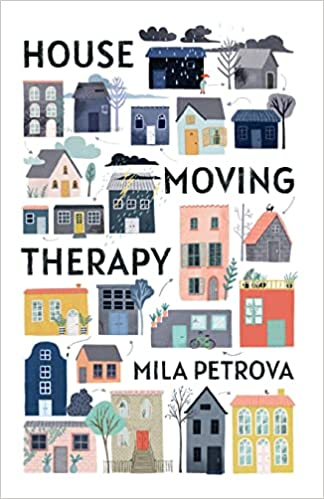
Book Review: “House Moving Therapy” by Mila Petrova

Rating: 3 stars

Headline: A book which tries to boil the ocean in its style with somewhat tepid results

Review:

House Moving Therapy by Mila Petrova is, if nothing else, a creative homage to one determined author’s relentless determinism and resilience toward frequent property moves. Using her personal experiences, Petrova brings to market a guide which aims to support readers going through relocations, be it through the author’s empathetic words or in the medium of tough love, providing instruction on how to get through the ordeal as swiftly as possible. Throughout, Petrova’s advice is considerate, factoring in the impact property moves can have on one’s mental health and wallet.

The structure of this book is straightforward enough, five chronological sections with multiple chapters listed underneath, coupled summary boxes as conclusions to most of the key chapters. At nearing four hundred pages long, there is certainly a lot to digest here in terms of content. This is probably the book’s major stumbling block, one which limits its potential audience. While in places Petrova bestows some valuable tokens of advice (e.g., how to decide what items to keep versus what to throw away, how to ship items to a new address without breaking the bank), these insights are bogged down in far too much surrounding copy that could have been cut out altogether. Long paragraphs have a tendency to veer somewhat off topic, switching from numbered bullets to detailed descriptions of Petrova’s past life, in a way that feel more akin to memoir than self-help. At points it feels like the author has lost focus on the book’s intended purpose.

Personally, I think this book would have benefited from being split in two; one book covering the practical ‘how to’ of moving house and a second publication that was more reflective in outlook, focusing on the author’s personal experiences. This follow-on title would been beneficial memoir in its own right. Petrova’s writing is of a respectable calibre to produce both stand-alone books, instead of one chunky title.

House Moving Therapy tries to boil the ocean by tackling distinct two genres in one book and in this case, the writing just isn’t quite up to par to pull it off.

AEB Reviews

Links:

Reedsy Discovery Review: AEB Reviews – “House Moving Therapy”

Purchase Link: “House Moving Therapy” by Mila Petrova (Amazon)

**

Could you spare a dollar to support me doing what I love? Donate here!

Alice’s Funding Page

**