Four days, three cathedrals and a little writing desk: Things to do in and around Chichester

Work blessed upon me the opportunity to take off a few days (otherwise know as “use it or lose it”). While boyfriend Ben toiled away with delights of his own, I used the opportunity to spend four (and a bit) days in and around Chichester in South England.

Day 1 – Winchester

On my drive down to Chichester I stopped off at Winchester for half a day.

Top tip: expect to be persistent with parking. I drove around the two “park and walk” car parks on Worthy Lane for thirty minutes before striking up a conversation with a pedestrian and taking his space when he left. Park and walk car parks are limited to four hours maximum stay.

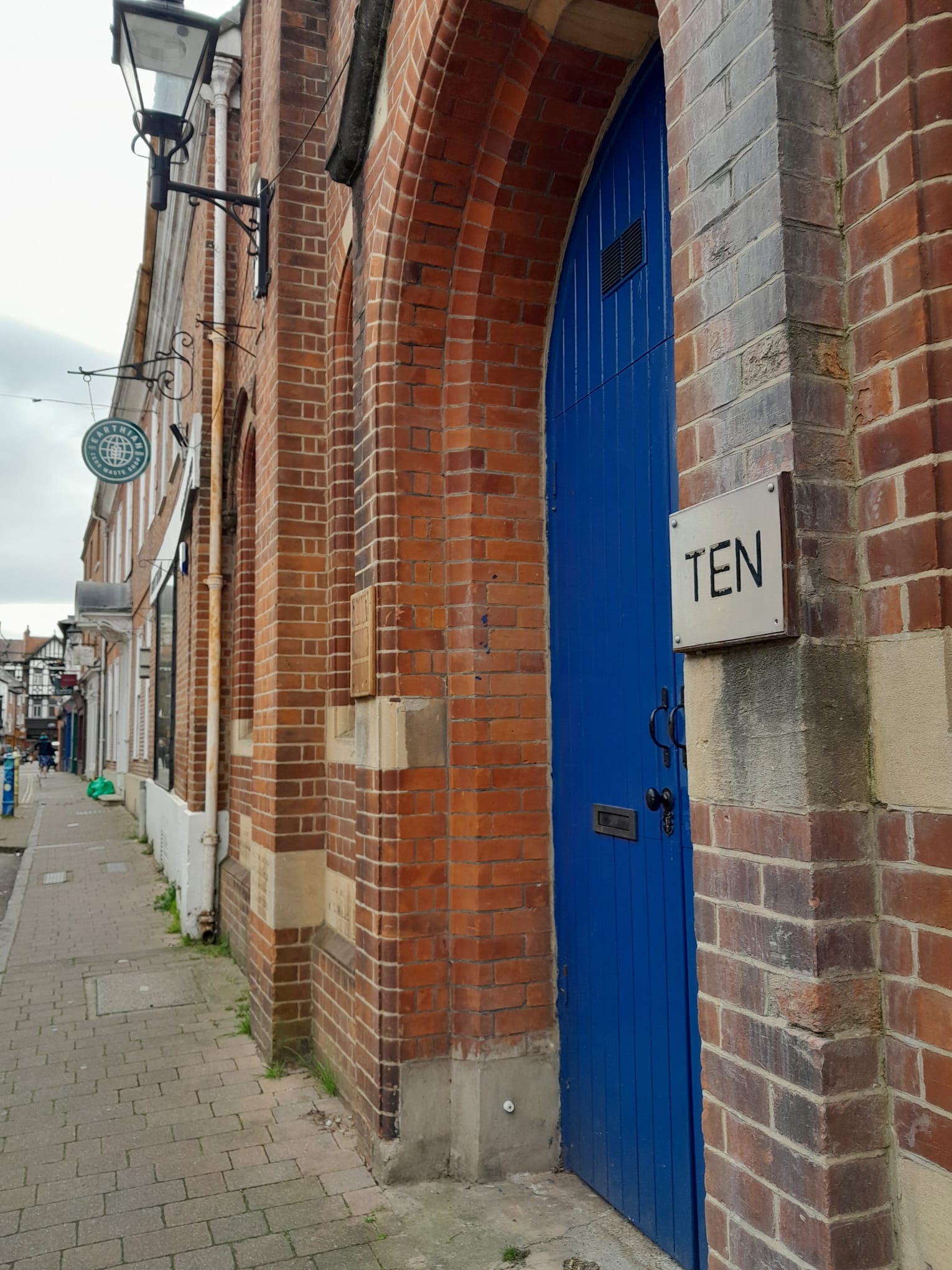
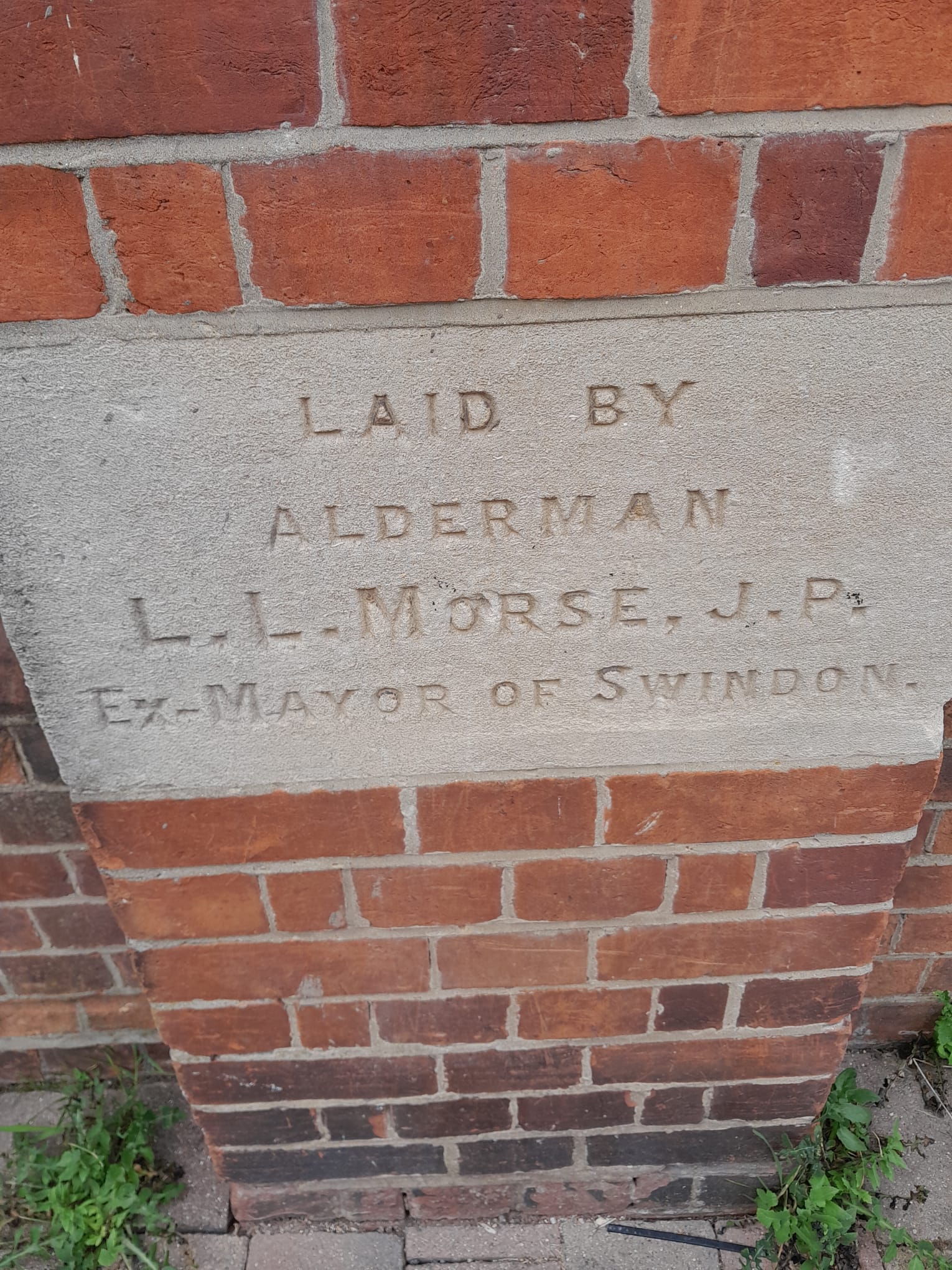
It had been years since I’d visited Winchester, when the city was a source of escapism from my studies at Southampton University. Strolling around some of the quieter streets I found a building that included a brick laid by one of Swindon’s historic mayors, a claim to fame worthy of a photo.
Winchester Cathedral is where I spent the bulk of my time. First at the cathedral’s café, tucked away behind a high wall at the front of the cathedral, and then in the cathedral itself. The last (and coincidentally first) time I visited was in 2011, which ultimately swayed me into the decision to pay £13.50 for entry (valid for a year).

As well as hosting many examples of beautiful architecture, the cathedral also contains a memorial stone to Jane Austen and a permanent exhibit, “Kings & Scribes”. The three levels of the exbibit include the cathedral’s history, original biblical scripts and a King James I bible. A personal highlight was the the Bishop Morely library, full of old dusty books on pretty much every topic known to medieval man. Friendly volunteers were on hand throughout to answer questions.

Jane Austen memorial stone
Inside Winchester Cathedral

Filled with a hefty dose of history and teacake, I headed back to my car and drove onto Chichester and the little cottage I’d booked. I spent the evening with a ready meal and got an early night, ready for the day ahead.

Day 2 – Chichester

On my first full day I made the most of everything outdoorsy the city had to offer. This started with coffee and homemade cake at the Canal Café, a volunteer-led operation at the Chichester Ship Canal Trust. A lovely way to spend an hour people watching.
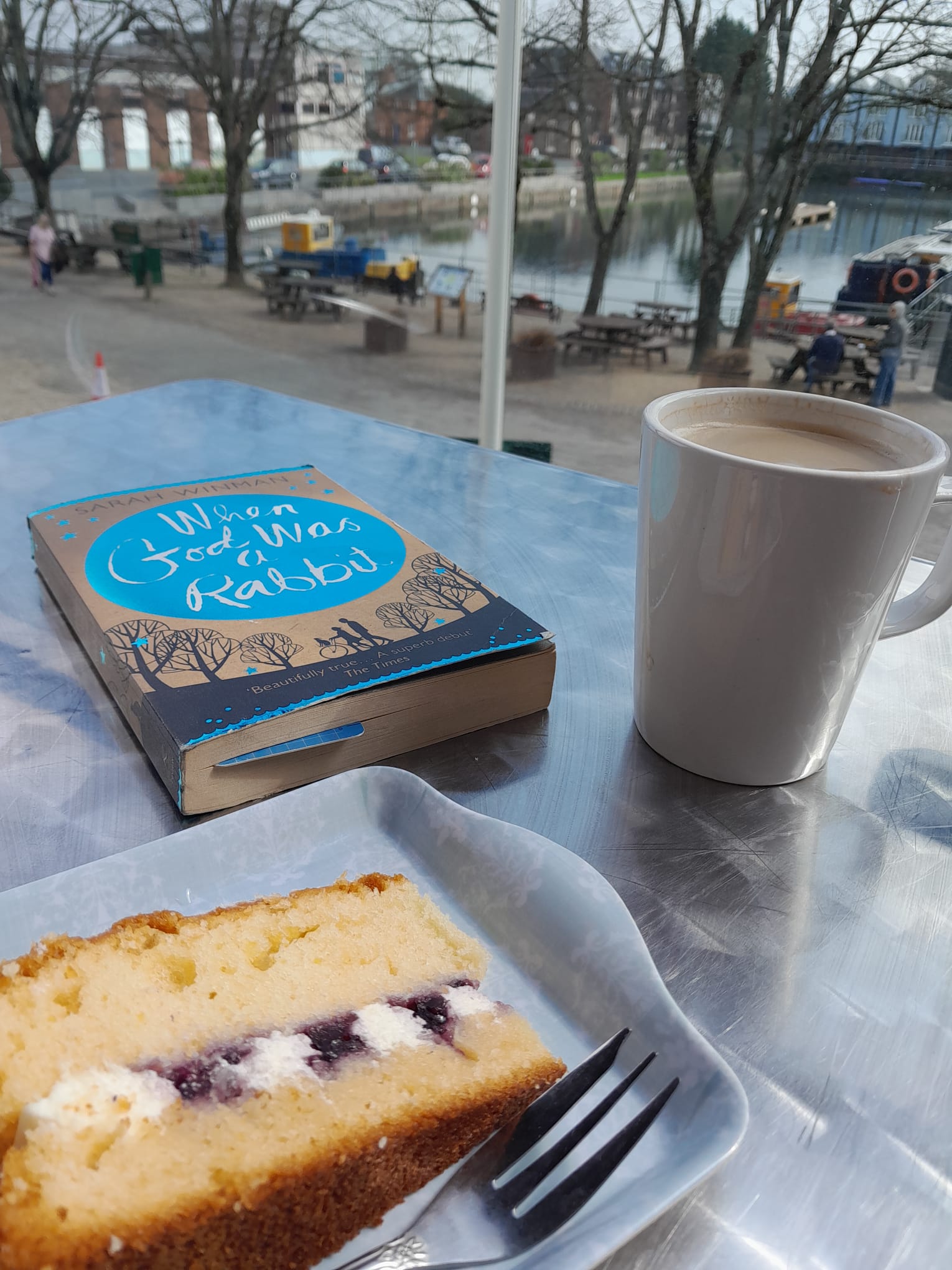
On the balcony of the Canal Café, Chichester

In what was meant to be “ten minutes one way, ten minutes back”, I ended up taking a leisurely stroll along the length of the Chichester Ship Canal.

The canal itself is a pleasant walk, flat terrain with information boards dotted along the full course. This stretch is also believed to contain the view that inspired the famous “Chichester Canal” painting by artist J.M.W. Turner.

The view that inspired Turner: Chichester canal, with the spire of the cathedral visible in the distance

I caught one of the frequent buses at Chichester marina to get back into the city centre (the circular route involves walking along a stretch of very busy road with limited footpaths).
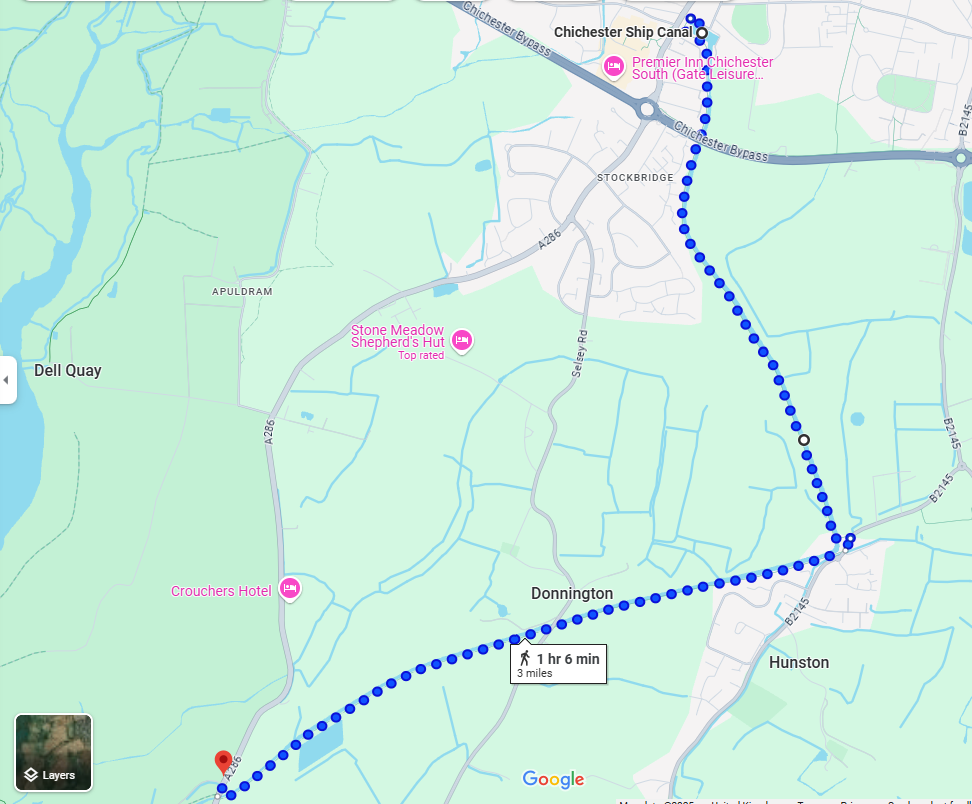
In the afternoon there was time to visit The Novium Museum, a free to enter museum which features sizable remains of a Roman bath house, alongside permanent and rotational exhibitions on the history and culture of Chichester. It’s also the home of the city’s tourist information point.

In the evening I dined at Franco Manca, Chichester. They put me in the window, providing a lovely view of the Cathedral at night. Sadly, service was pretty poor, I felt like I’d been completely forgotten about.

Day 3 – Arundel / Chichester

Waking up slightly later than planned, I made the fifteen minute drive to the town of Arundel to be greeted with ample parking in one of the main car parks.

Top tip: Stays of over four hours = a sharp increase in parking charges, so consider taking the train if you plan on visiting for the full day. Trains run frequently from Chichester to Arundel station, which is about 15/20 minute walk from the town itself.

Arundel Castle was sadly closed at the time of visiting, but that didn’t take away the enjoyment in having a leisurely stroll around the small streets and independent shops that call Arundel their home.

A visit to Arundel Cathedral is a must for those who can squeeze it into their itinerary. As well as being free to enter, this cathedral is a central feature point on the Arundel skyline and one of the few Roman Catholic cathedrals in England (blame Henry VIII).

Inside Arundel Cathedral

As a side note, I was disappointed to have missed out on Arundel Castle due to its seasonal openings. Given the number of people milling around Arundel, I think the owners may have missed a trick. Another attraction for another time, maybe!

After driving back to Chichester in the mid afternoon, I visited another cathedral (my third in as many days). Chichester Cathedral is free to enter.

Chichester Cathedral

At the time of visiting, the cathedral had an exhibition to celebrate its 950th anniversary. For a free-to-enter site, the standard of this exhibition was high, with colourful and engaging boards, and cabinets filled with carefully selected artefacts from the cathedral’s collection.
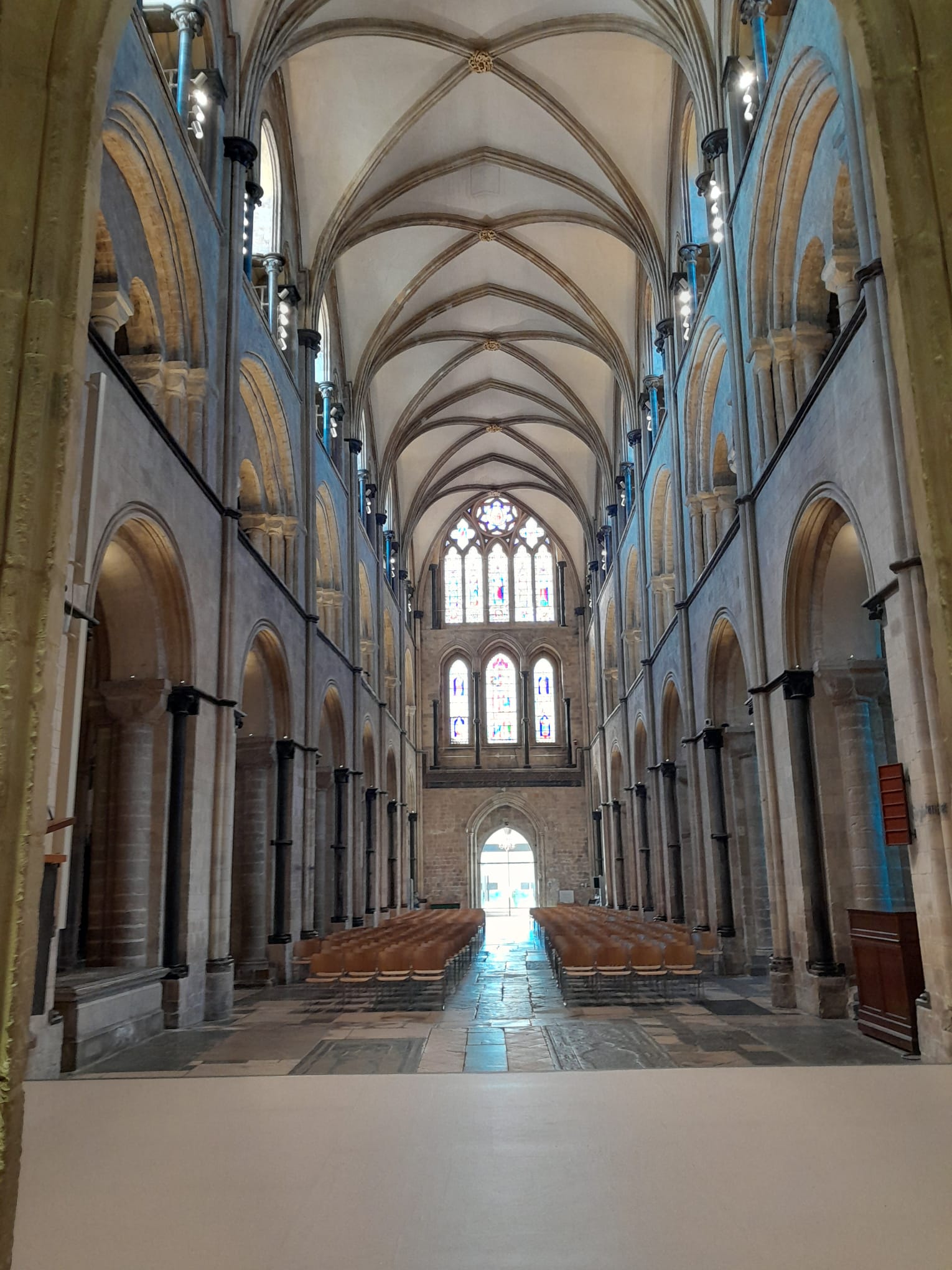
Inside Chichester Cathedral

In the evening I ate at the Italian restaurant Piccolino, Chichester. It was very busy, and the prices a little bit on the steep side. They seated me in the front window, which doesn’t usually happen as a solo diner! Owing to the price, I went for a simple pasta dish.

Day 4 – Chichester

I spent my fourth day in numerous coffee shops in Chichester. Reading and writing to my heart’s content, it was wonderful.

Independent shout out: Naima Speciality Coffee (Instagram account here.)
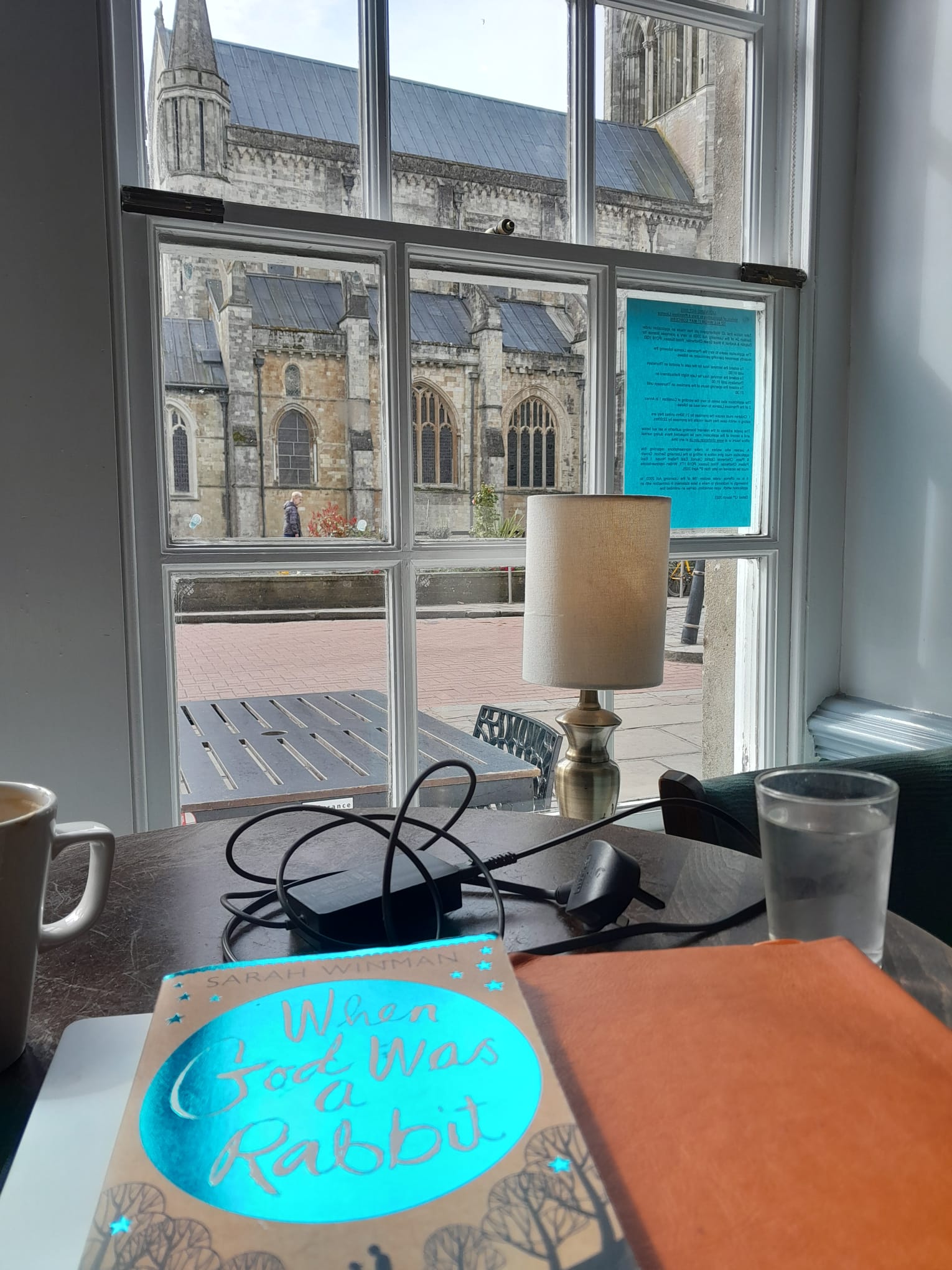
Morning coffee and words at The Dolphin & Anchor (a Wetherspoons with great views of the cathedral)

In the evening I ate at Bill’s Chichester. Staff were very friendly (especially given it was a Friday and the place was packed). Bill’s is a popular chain, you kinda know what you’re going to get. Good food, at a reasonable price.

Day 5 – Chawton, near Alton

Driving back home, I stopped part-way into my journey to visit Chawton, near Alton. This little village is quaint in its own merit, but what sets it apart from other Hampshire villages is its connection to literary royalty. 2025 marks Austen’s 250th birthday and by the time I’d booked my entry ticket to Jane Austen’s House I was practically whipped up into a new wave of Austen mania.

Top tip: book in advance, as numbers entering Jane Austen’s House are strictly limited. Once you’re inside you can stay as long as you like, and the small surrounding garden has no time restrictions. Dogs are not allowed inside the house.

Jane Austen’s House, Chawton. It is in this house that Austen worked on and published Sense and Sensibility, Pride and Prejudice, Mansfield Park, Emma, Northanger Abbey and Persuasion.

The house is part staged reconstruction (downstairs), part exhibit (upstairs). Seeing Jane’s writing table and her surviving hand written manuscript drafts on tiny sheets of folded paper, shows that in the literary world size doesn’t always matter.
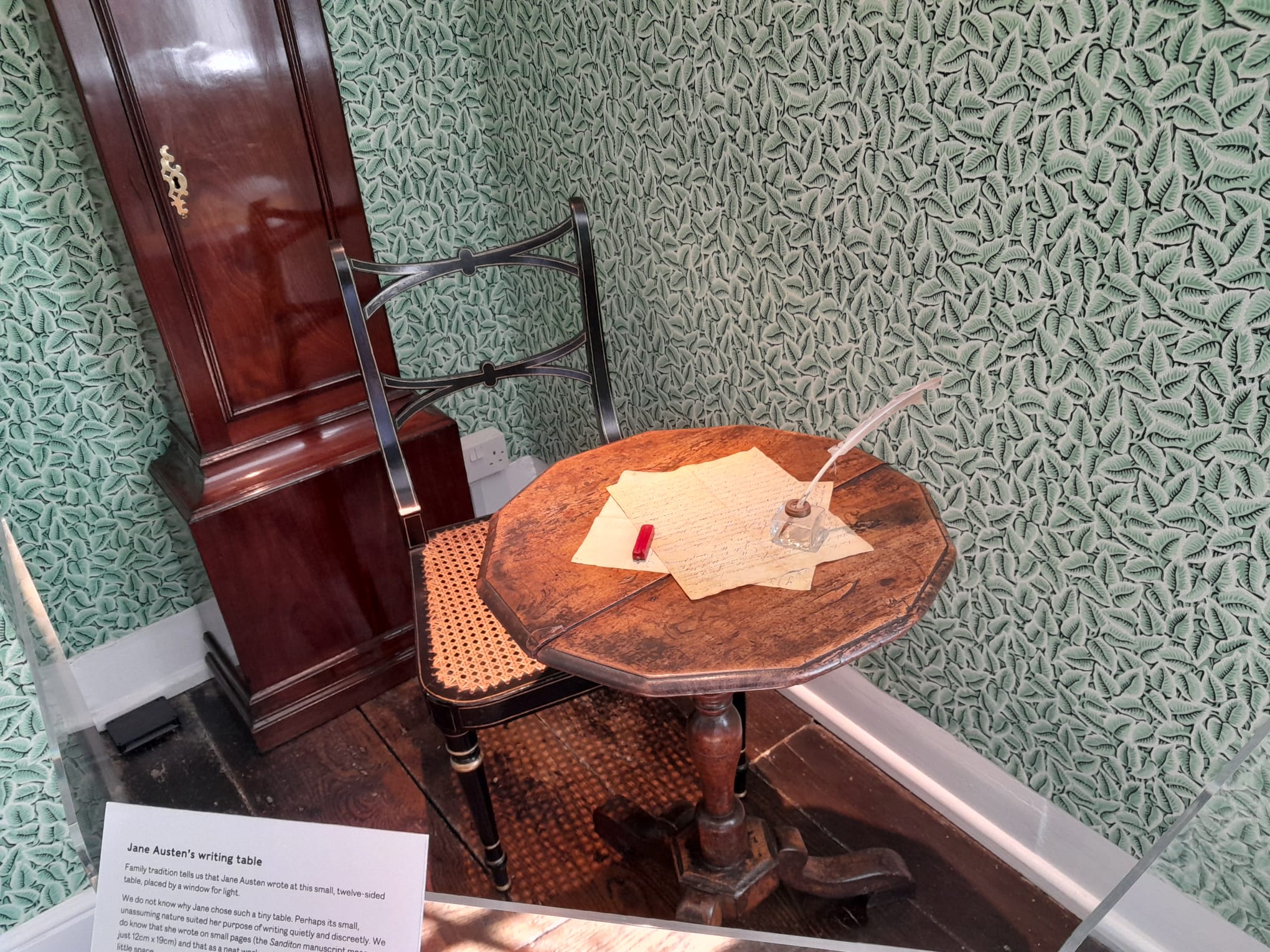
Jane Austen’s writing table.

After the house, I sat in the garden and read my book, before making my peace and exiting through the gift shop, avoiding all eye contact with the highly tempting merchandise on sale.

The garden at Jane Austen’s House is the perfect spot for a moment of tranquillity.

After Austen’s house it felt only right to pay my respects at the gravesite memorials of Cassandra Austen and Cassandra Leigh, Jane’s sister and mother who are buried at St Nicholas Church at the other end of the village, next to Chawton House (former home of one of Jane’s brothers, Henry). The interior of the church is pleasant enough, however is a little overshadowed by the long line of people marching past the front door to get sight of the Austen graves tucked around the back.

When it comes to light refreshments, The Old Kitchen Tearoom at Chawton House has plenty of seating and Chawton itself offers a welcoming pub and café.

The Old Kitchen Tearoom at Chawton House

From Chawton I drove back home, returning by the late afternoon and ready for a cup of tea and a full debrief with Boyfriend Ben. A chilled Sunday followed, before returning to work on the Monday, refreshed and ready to take on the 1000+ emails and twice as many Teams messages and missed Zoom calls.

A wonderful few days with the glorious weather to match. Who says you can’t get sunburn while holidaying in Britain?

AEB

NB: All prices, information and external links correct at time of writing, April 2025

**

Could you spare a dollar to support me? Donate here!

Alice’s Funding Page

**

10 Things you Simply must do in the North Cotswolds

The Cotswolds are a beautiful part of the world. Rolling green hills, golden stone brickwork and chocolate box villages make it one of the most desirable tourist destinations within the UK. It’s also a large region notoriously hard to pin point.

40ed199a4ffe8c5e524f5b7a08ae592a.jpg

According to this map Swindon and Evesham are in the Cotswolds which frankly is the funniest thing I’ve seen all day.

Who better placed to review North Cotswold attractions than someone raised in a border village? After all, no one goes on holiday to spend hours in tourist information centres.

asf.jpg‘North Cotswold Triangle’ shown on map above.
10 Things you Simply must do in the North Cotswolds

1. Chipping Campden

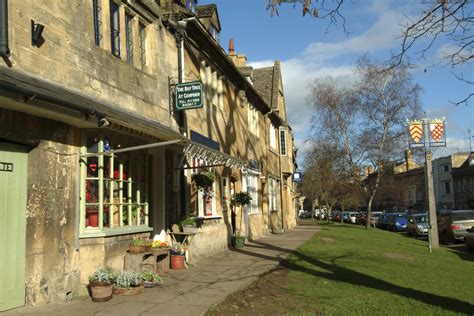
This little market town marks the most northern point of the region and typifies a lot of the features you’d expect to find in a place that made its wealth in the wool industry.

Chipping Campden has been able to retain vibrancy in its little independent shops, pubs and coffee houses spread along the main high street and having attended secondary school in this sleepy town I can certainly vouch that it’s worth a couple of hours of anyone’s time. During school holidays you can park in the school’s car park or, if you can’t park along the street, there’s a small pay and display car park in the centre.

Fun fact: Chipping Campden is home to the design studio of popular silverware brand Robert Welch.

thNJ7R7IGM.jpg

2. Walk the Cotswold Way

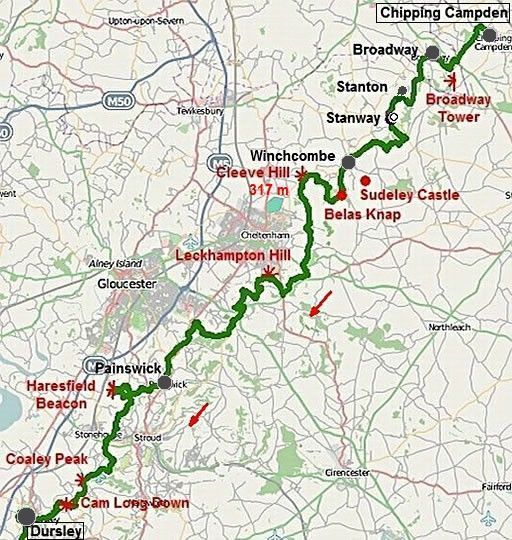
Linked to the above, Chipping Campden is one town that sits on this popular walking path. On this one I won’t compete with the multitude of books and websites (there’s plenty of information out there) but I would encourage anyone visiting the area to tackle a shortened route or section.

Cotswold-Way_map.jpg

3. Broadway Tower

Representing the highest point and one of the most iconic Cotswold symbols, Broadway Tower gives the best views for miles around. Don’t be fooled by the title though, this charming folly is located a short drive away from the market village of the same name, that said the hillside has considerably developed in recent years enabling visitors to linger a little longer and treat themselves to stylish interior buys and coffee in the converted barn.

If views aren’t your thing there’s also an underground nuclear bunker on site which is open to the public on weekends during the summer period (April – September). Closed in 1991 but restored to its 1980 appearance, it’s one for Cold War era fans.

Worth noting that this site gets busier during peak times (e.g. summer and weekends) and while fairly substantial the car park does fill up. Given the hillside bumps that sit alongside the tower, sheep are sometimes let lose to keen the grass trim resulting in lots of ‘little presents’. For both reasons sensible footwear is recommended.

Top tip: You can pay to go into the tower itself where a brief history of the area and exhibitions are presented. At time of writing tickets for adults are £5. My advice? Save the money and invest in coffee and cake at the tea shop.

thLPV7VRGP.jpg

4. Cotswold Lavender

In many of the fields near Broadway Tower you’ll find the purple shrub growing in large quantities, spoils of which go into making the popular scented products sold by the Cotswold Lavender company. When the lavender is in season a visit to the farm is an experience for all the senses.

In a rush? If the lavender is in full bloom make the effort to drive down the country lanes that cut through the crops. The intensity of fresh flowers combined with a gentle breeze is something you won’t forget in a hurry.

5. Go for a drive (and give the sat nav a rest)

Take a map and a basic idea of where you want to go and just drive. There are some beautiful Cotswold lanes and undiscovered hamlets to be found across the North Cotswolds and, better still, the roads are all of solid quality and easy enough to spot (even if they’re not always signposted well).

If you want to really experience the Cotswolds you have to avoid the well trodden path. Everyday large numbers of coaches take visitors (from the UK and overseas) on day visits to the main destination towns. Popular towns are popular for a reason and in peak season it’s not uncommon for individuals to come away feeling disappointed with the experience they get at such places. My advice? Ditch the crowds and gain a unique experience by going for a scenic drive. Who knows, you may even discover a location or pub you go back to later on.

Word of Warning: the unique experience will also mean a lack of mobile phone reception and make sure the tank is full of fuel before setting off (petrol stations are not a common sight in the rural Cotswolds).

6. Hidcote Manor Gardens (The National Trust) and/or Kiftsgate Court Gardens (Privately Owned)

My family home is quite literally at the bottom of the hill so I’d be foolish to not give a mention to these world famous gardens, both of which are neighbours. That said, having spent my entire life living in the shadow of Hidcote my opinion on the gardens themselves are a bit mixed (personally I think there’s a touch of Emperor’s New Clothes about them). I do however respect their popularity and historic value and would always encourage people in the area to visit either Hidcote or Kiftsgate (or both) because they are a big deal and a ‘must do’ if holidaying. 

Hidcote is free to National Trust members, Kiftsgate has an admission fee. As per a lot of attractions these gardens get busy so my advice would be to go early and on a nice day (if it rains there is little to no shelter).

thLU4BKI90.jpgHidcote Manor Gardens

thCZ6VZGYU.jpgKiftsgate Court Gardens

7. Stratford-Upon-Avon

Whilst not located within the parameters of The Cotswolds, Stratford brings with it a different vibe compared to that of its rural neighbours. As well as being home to Shakespeare Stratford also has a rich history dating back hundreds of years. A quick google search will provide you with several days worth of activities.

Depending on where you’re holidaying in the region Stratford is only a short drive away and worth exploring to get a comparison. It’s also home to a number of high street shops and well known eateries during the day and stylish wine bars and dining at night.

Top Tip: Don’t kid yourself into thinking the Royal Shakespeare Company (RSC) will have a multitude of same day performance tickets available. The majority of tickets sell out months in advance so book them at the same time you book your accommodation. Also check out ‘Stratford ArtsHouse’ – a venue that has come leaps and bounds in recent years. This small theatre pulls in a number of touring comedians and plays.

8. Bourton on the Water/Broadway/Stow on the Wold etc.

Granted these places do get busy but there’s a reason for that. Heavily photographed and easily accessible, any of the above towns will be found on number of visitor check lists. Each town has their own history and charm, for example Bourton is frequently referred to as ‘the Venice of the Cotswolds’. Avoid these places like the plague on August weekends/bank holidays, but otherwise they’re worth a visit if you’re seeking souvenirs and wanting to experience the pure essence of what the Cotswolds are all about.

th1APNB04C.jpgBourton on the Water

9. Batsford Arboretum (near Moreton in the Marsh)

If you’re visiting the North Cotswolds in Autumn and not considering this as a destination then think again. Batsford is home to a large number of tree species and is coincidentally the country’s largest private collection of trees and shrubs. That aside, it’s also a great place for photography, wandering and (if kids or big kids are present) running around and letting off steam.

Batsford-Arboretum-bridge.jpg

10. Snowshill Manor (The National Trust)

Located near Broadway, this National Trust property houses the collections of Charles Wade who bought the property in 1919.

The random but fascinating treasures held in this house define both the owner and period and show an early 20th Century interpretation of what the modern day rich do when money is no object. If you don’t dwell too heavily on the wealth being sourced from slave plantations in the West Indies then you’re in for an insightful experience. Each room provides a different exhibition of artefacts, it’s history within history.

Top Tip: during peak periods entry to the house is administered on timed tickets. Visit the property first before lingering in the gardens. The property itself is also a short walk away from the coffee shop/entrance which is worth noting before you set off.

th4PLNN482.jpg

(11. Stanway House and Gardens)

Stanway is probably the best kept secret of the North Cotswolds, if not the entire Cotswolds. Only open two afternoons a week in the Summer (Tuesday and Thursday), this fully functioning family home will provide a truly different experience to anything you’ll see at a National Trust property.

Volunteers run every element of public-facing operations, from collecting tickets and acting as room guides, to running the tea shop in the converted stables. Inside is an explosion of old vs new, antique tables and tapestries coupled with modern day invoices and weekly food shops. The garden outside displays a dramatic jet fountain which rises to 300 feet (making it the highest jet in England).

Wonderfully eccentric and undiscovered to the majority of tourists (but well known by locals), this is the attraction that none of your friends or family will have visited.

Stanway-House.jpg

And there you have it…

…some starting points for things to do in this Cotswold pocket. Of course there are a many number of other places to visit in the region (for example Bourton has a record-breaking model village and Chipping Norton is also a popular go-to destination). However I hope this list gives you a feel for the range of attractions and culture us Cotswoldians are proud to have as our own. If you want a taste of the Cotswolds (and beyond) then the North is certainly your best bet to get all you need from a relaxing mini break.

Think I’ve missed off a notable attraction? Add your comments below!

Useful Links (please note that all direct to external websites)

Broadway Tower

Cotswold Lavender

Kiftsgate Court Gardens

Hidcote (The National Trust)

The Royal Shakespeare Company (RSC)

Stratford ArtsHouse

Batsford Arboretum

Snowshill Manor and Garden (The National Trust)

Stanway House and Fountain