Five Minute Review: What the F*** is Normal?! By Francesca Martinez

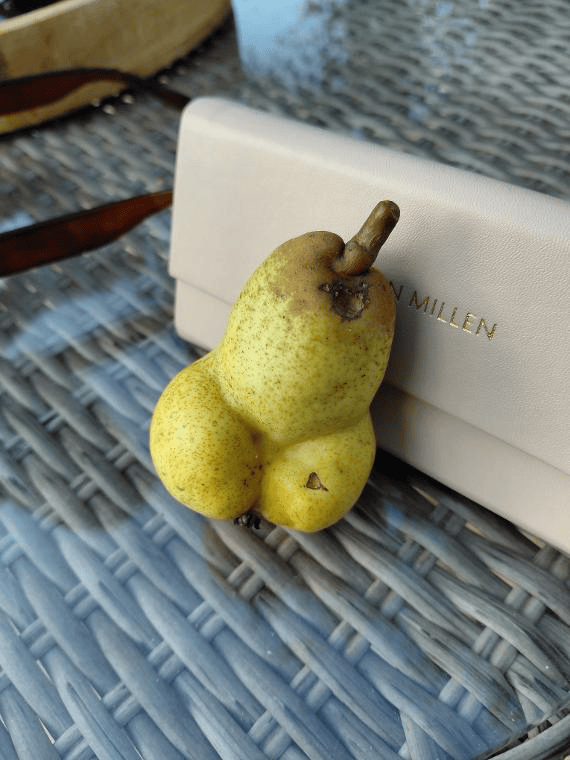
Do you like the cushion? Yeah, me too. I thought that when it came to summing up this book it struck the right balance between deep and pretentious. Okay, so five minutes to review a recent read. Lets go.

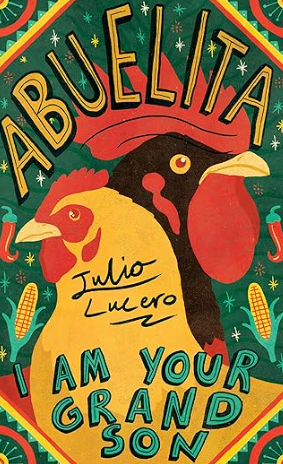
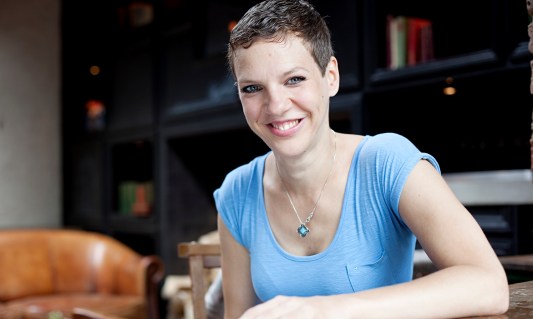
What The F*** is Normal?! is an autobiographic affair by the comedian Francesca Martinez. Born with cerebral palsy, but waging a one-woman campaign to rename it to simply “wobbly”, Martinez gives a first-hand perspective of growing up with a disability in 1980s/90s Britain. Making light out of what are often very bitter or bleak encounters, Martinez takes us through the various stages of her life that have shaped her into the woman she is today. In one instance Martinez describes with mild humour an experience with a GP who doesn’t know how to handle the author’s disability. Reading the account for first time you feel frustrated and even a bit angry that this scene could have possibly played out so recently over something so small as a sore ankle. This is an author that has been through a lot at every stage of her life. It made me wonder whether society’s attitudes towards disability is much improved now, or whether as an able-bodied person I’m just unaware of the difficulties faced by millions each day.

Martinez also devotes a portion of her autobiography to re-educating Western culture. Never shy of a challenge, Martinez addresses the very real issue of consumerism and how it can damage our own self-respect. Simply put, depression of the masses fuels the yachts of the few. Despite being bullied by similar types in Secondary School, the author reaches out to the popular teenagers of today to stop worrying about appearances and embrace body confidence instead.

What The F*** Is Normal?! is an autobiography that ticks all the boxes; easy to read, humorous but also a fascinating study. All by a comedian who is not afraid to challenge disability stereotypes and poke fun at one of the great taboo subjects of modern culture. In the subtly of a true comedian, Martinez points out that ultimately life could be worse. After all, one could be starving in Africa, aborted in the womb…or even a pot of hummus.

There’s a Reason Why I Unfriended You

If very recent events have taught me anything, it’s this shocking revelation: Not everyone in the world wants to know me.

Facebook in all its wonderfully pointless nature drives us to want lots of ‘friends’, but everyone from CEO Mark Zuckerberg to ‘it’s a waste of time’ Mumma Bennett knows that’s the concept of friends on social media is a load of baloney.

Putting one’s metaphoric geek chic glasses on, Google search (because I invest that much time into blog research), defines ‘friend’ as…

“A person with whom one has a bond of mutual affection, typically one exclusive of sexual or family relations.”

Bear with me, just trying to read between the lines here. Does it say “someone who posts ‘happy birthday’ on your profile”? Or, “the cute guy in class whose photos you stalk in an affectionate, totally not creepy, way”? No, no it certainly does not. I mean, who seriously wants even fifty friends nowadays? Imagine all the birthday cards to send, you’d never stop! Therefore around 95% of the people you, I and the butcher’s dog have on Facebook are, within reason, no more than acquaintances. They could be either on the cusp of friendship or a guy you met once in Freshman year. If any of this so far is an utter shock to you then you need to undergo the same experiment/evening wasting activity I conducted a short while ago.

Because I’m a shameless sell out, I’ve been trying to promote my writing/the blog through means of a Facebook page. (Oh, what was that? You didn’t quite catch the link? Here you go: https://www.facebook.com/MyHousematesAMermaid/) In the process I openly went out and messaged every single one of the contacts on my Facebook friend list. For each message I carefully thought about what to write, racking my brains for a shared connection or memory that brought us together in the first place.

Was it a cheap ploy to up likes? Yes. Was I curious to hear what people were up to? Yes, very much so. In a world of enhanced imagery and like-baiting statuses, I’ll take what comes from the horse’s mouth.

Most of the people I messaged did respond positively. I was dead chuffed at that. A fair few commented that they liked my work and they liked the page in turn (thanks guys, big up to your love and support). I got reacquainted with old ties, I told them about my life, they told me about theirs, it was great. Admittedly with 100 odd people messaging me at the same time (for one evening I felt like Beyoncé) most of the conversations tailed off after a couple of exchanges, but nonetheless they were pleasant and interesting. It’s funny to hear what the girl sat three seats down in Year Nine Science is up to now, and amazing to hear tales of Chemistry flatmates saving the world with new research in California.

On the flipside there were those who didn’t respond. Some of which were the people I thought I’d hear back from, even if it was just a quick “sure, done!” Or “no thanks”. A sizeable chunk of the no responders I expected, but for some there was no rhyme or reason. Other than they hate my work, that’s very much possible (and accepted – you can’t please everyone).

The whole experience has lead me to undergo a Facebook ‘friend’ clear out. Man, it feels good to do a social media cull every so often. So, if you’re wondering why I’ve unfriended you, here is a comprehensive list of reasons why:


  • We met once and haven’t spoken since
  • You were unpleasant to me at school but 16 year old me felt obliged to have you there
  • I genuinely don’t know who you are
  • You’re my friend’s ex (and we barely spoke when you two were a thing)
  • I don’t like you
  • You don’t like me
  • We wrote a group essay together. That’s not friendship, that’s me wanting to chase you for references at 2am
  • Too many statuses
  • I don’t want you near my holiday snaps
  • I don’t want you near me when I become a super, mega, sensation
  • You won’t even realise that I’ve unfriended you
  • You would have unfriended me yourself if I didn’t do it first
  • When I look at your profile, your photos, job, statuses, partner etc. only three words spring to mind: I don’t care


Reasons why you’re still my friend on Facebook:

  • You’re a decent person
  • I could engage in semi-awkward small talk with you (think the conversations you have in hairdressers)
  • You’re family
  • You’re my amazing friends
  • The stuff you post is interesting and/or informative
  • I’m scared for my own safety if I unfriend you
  • I’m on the fence and don’t want to have to awkwardly add you as a friend later on


There you have it. I may add to this after a bit more friend culling, wherein I may accidentally delete family members, close friends or quite possibly even unfriend myself in my frenzied state to clear out the baggage.

Five Minute Review: The Classic Cocktail Bible

How do I sum up this book? Alcohol, that’s how. Lots and lots of alcohol.

Amusingly you open the cover and see not a Drink Aware message, but instead a warning against consuming raw eggs (a foodstuff that features in some of the recipes.) Sandwiched between the hard covers of this recipe book are some very attractive looking images and nice little introductions to each drink (where their name comes from, the type of ingredients in the drink etc.). You’ve got the classics, your Mojitos, Bloody Marys Martinis, but you’re also got the different, for example Kinky Witch, Rusty Nail and Bobby Burns. In many ways there is something for everyone here* (unless you’re teetotal or under eighteen, in which case no, there isn’t).

All this however doesn’t detract from the simple truth that, as with all cocktails, you need about 100 different spirits and mixers tucked away in the cupboard to make them. The Classic Cocktail Bible is a classic by name and a classic of its genre; it is a book which sits on one’s shelf for many months/years until one day you think “oh, I really fancy a Cosmopolitan right now, I’m sure I can make that”. You open this book to mild disappointment when realise you can’t so instead you reach for a can of cider and consume that instead.

The Classic Cocktail Bible is a must have for the coffee table of the young professional or the kitchen cupboard for the impulsive buyer but be warned, it takes more than vodka and coke to make a good cocktail.

Catherine Mayer on equality, red reads and the manifesto she wants you to steal

Crossing the stage, Catherine Mayer strikes a formidable figure as she throws down her bag and proclaims, “will there be rock?!”

Such an entrance is bold, confident and, above all, powerful, but then what else would you expect from a former TIME editor, turned pro-equality figurehead? An awkward chuckle fills the room from the collection of predominantly white, middle aged, women who sit before her.

Before starting her pre-prepared speech, Mayer casually brushes a few strands of hair from her face and dives into why Prime Minister Teresa May doesn’t represent female empowerment. The speaker’s assertive tone and head strong approach creates a stronger reaction in the auditorium. This is no ordinary run-of-the-mill feminist. After a couple of minutes, the speaker looks down at her stop watch and realises she’s been Minister bashing for too long. “Sorry, I tend to ramble” she apologises, before beginning the focus of her allotted slot; a seminar of her new book Attack of the 50 Ft. Women: How Gender Equality Can Save The World!

Mayer’s presentation style is intense to say the least. You can almost taste the venom being spat from the author’s lips as she laments over those who suggest women are empowered. “It’s the same with red heads,” she explains, “people assume they form the majority in Scotland when they don’t. The simple truth is that red heads and women stand out, so we imagine their numbers to be higher. If you include Scotland, only sixteen of the world’s leaders are women.”

Alongside the publication of a book, in 2015 Mayer founded the Women’s Equality Party (WEP) with the help of media personality Sandi Toksvig. The empowered speaker was keen to put across the struggles facing modern day politics and her aims for the WEP. “If we get into power, we win! If the other parties steal our ideas, we win!” Nods of approval circulate around the room. In an age of politicians scrambling over each other to reach the top, it’s refreshing to have a party which doesn’t seek to necessarily become ‘top dog’.

Given her background as a political reporter and the nature of the viewing audience before her, it is no surprise that Mayer devotes a portion of her time explaining the electoral candidates and policies representing her party. “In the Tunbridge Wells local elections we got 10% of the vote and beat UKIP” she comments smugly. It was therefore just as unsurprising that the audience challenges Mayer on ideology, notably the use of the word ‘women’ in WEP. Conceding that the use of gender in the party’s name did make broaching the opposite sex a harder task, Mayer firmly argues that to call themselves “the Equality Party” would detract from what her party was trying to achieve. “We might as well rebrand ourselves the Labour Party” was the sly remark.

Disgruntlement from Mayer’s groupies emerges when the female lead comments on other political organisations stealing WEP policies. Mayer, unperturbed, shrugs it off. “Can you keep a secret?” She giggles, “we’re going to send out copies of our manifesto to the main parties with a note that says ‘steal me.’” The audience laughs with the speaker and peace is restored once again among the frustrated women in the reaches of rows F to I. Already on a pro-feminist high, Mayer ends her segment by boldly proclaiming her plans to organise a one day strike for all women. The reaction couldn’t have been more overwhelmingly positive from the crowds below.

Even though this humble writer didn’t quite see eye to eye on all her beliefs, there is no denying Catherine Mayer knew how to work a crowd of disgruntled activists. Move over Wembley, Swindon Arts Centre may just be more rock and roll than you think.

catherine-mayer

Previous Swindon Literary Event write ups from AEB:

**

Could you spare a dollar to support me? Donate here!

Alice’s Funding Page

**

Francesca Martinez: “At Least I’m not a Pot of Hummus or Donald Trump”

For The Ocelot – Wiltshire What’s On Magazine


When it comes to mutually exclusive, ‘disability’ and ‘comedy’ are two words which you would normally expect to be in the taboo corner. So why do I find myself laughing at a “wobbly” lady’s failed attempts at cherry knocking?

Welcome to the hilarious and wonderful mind of Francesca Martinez. Born with cerebral palsy but waging a one-woman mission to have it renamed ‘wobbly’, Martinez sheds a brutally comedic look on her experiences growing up in an able-bodied world. Without blinking, she sweetly comments ‘funny how the girls who used to bully me now want to add me as a friend on Facebook. F**kers!’ before taking a long sip of water. It makes you wonder why anyone would pick a fight with Martinez. Not because she’s funny or a genuinely lovely person, but because under the smiles is a deeply vengeful personality.

Chatting with her in a in a stylish coffee shop in Swindon’s Old Town, without warning Martinez’s conversations divert from the trivial to the deeply philosophical. Two sips into my moderately priced Americano she states that the root cause of unhappiness is the consumer-based drive to always want better. ‘We want to look prettier, be thinner, have a better mobile phone, a better house. Our society is so aspirational we never stop and think about what we have. Once you stop and reassess those things you realise that life could be a lot worse,’ Martinez poignantly observes, before quickly adding ‘for example, I could have been a Rice Krispie…or Donald Trump.’ Cue another timely sip of water. ‘We’re all trapped in toxic bonds of our own making so when you think about it breaking yourself away is actually a form of civil disobedience.’

Having taken most of her life to discover and liberate herself from the evil clutches of self-loathing, Martinez is keen to spread a message of positivity. ‘I spent years thinking negative thoughts and my only regret is that I’ll never get that time back,’ she comments, ‘I do a lot of talks at schools nowadays where I ask students to put their hands up if they’re happy with their appearance. It’s really sad when no one raises their hand so I tell them “you’re in the prime of your lives. This is as good as it’s ever going to get!”’

Spending an hour in the company of Francesca Martinez is a delightful, if not insightful, experience. It is a testament to her abilities that in her presence you can see beyond the disability to the woman who lies beneath. Perhaps put more succinctly by the wobbly expert herself, ‘if I was retarded I’d have voted for UKIP’.


Francesca-Martinez-comedi-014.jpg
Francesca Martinez


An Honest Rejection

Yesterday I experienced my first authorship rejection. It also marked the first time that a group of people didn’t consider my work to be truly, fabulously, awesome. Weirdos.

The piece was short, a 500 word review which described a recent experience I had at a local restaurant. After working through a few drafts, I finally submitted the piece to the web content editor and moved on to the next mini-saga that is my life. In truth the post was quickly forgotten because a) I spew out a lot of waffle articles and b) like all my work it was a mini masterpiece, something that children will look at in the years to come and think “wow, Swindon really had some rubbish eateries in 2017”.

And therein lies why my article was rejected. The email that I had expected to contain a link to my work contained instead a put down. The web content editor had made the decision not to publish my review due to the tongue-in-cheek negativity portrayed in the copy. I forced myself to read the email again to be certain that I’d read the electronic text correctly. Realising that my article had indeed been rejected I shoved my laptop under the bed and grumbled into a cup of tea. You know, the kind of response mature people adopt.

A couple of hours later, after a sufficient amount of tea and biscuits had been consumed, I calmly reread the short email again. This time I was able to gain some reassurance at least that the quality of my writing wasn’t to blame. Essentially I had been rejected for not pampering to a catering outlet which, in my mind, didn’t quite reach the mark on the night I visited. I still stand by my views and remain of a firm opinion that any venue, author or artist should be open to both positive and negative criticism. I know that my reader base would quickly bore of my writing or disbelieve its authenticity if everything I wrote was a falsehood of how wonderfully magical everything is underneath our blue skies. Free speech and my own personal sanity is dependent on balance.

Like hitting writer’s block and slowly improving my work over time, I don’t view this rejection as a bad experience but a new one. I now know that that whilst this particular outlet has no qualms with the quality of my work, they only want to hear good news stories, not controversial. I wish they’d told me that before but at least I understand the lay of the land. What can I say? Haters gonna hate…negative writing. Besides, they’re not paying me anyway.

On the flipside, the other news outlet I freelance for love balance and spicy writing so they have happily published my work (huzzah!) You can check out the rejected review here:

http://www.theswindonian.co.uk/girl-about-town-biplob-tandoori-old-town/

Five Minute Review: Far From the Madding Crowd by Thomas Hardy

One classic novel, five modern minutes to write up its review…

Far From the Madding Crowd by Thomas Hardy is a novel which depicts the relaxed pace of life in the countryside of 19th century England. It essentially tells the tale of three men from different backgrounds fighting for the love of one woman. You come to dislike them all to more or lesser degrees. Bathsheba (yes, that is her name) is a character with little warmth to her personality and, like all urban dwellers of the period, treats her rural tenants like dirt on her shoe. There’s Gabriel Oak, a hapless shepherd which following disaster finds himself working for the rich and snobbish Bathsheba. To say Oak is obsessed with Bathsheba would be a vast understatement. It’s no plot spoiler to say he proposes to Bathsheba and gets turned down within the first couple of chapters (keen much?). Then you’ve got the more maturely aged farmer Boldwood who, after receiving a wicked joke Valentine’s card, becomes infatuated with our female lead. Finally there’s Sergeant Troy, a passing army figure and notorious womaniser. Guess which one Bathsheba takes a shine to?

People often get doe eyed with the English rural landscapes depicted in this novel, but I don’t see it. To me this novel depicted country folk as a backwards breed who spend all their time rambling on and on about nothing at all. One of the few times I felt sympathy for Oak was when he was trying to get urgent help but had to contend with a bunch of idiotic drunkards in a pub. Who is going to give you money for booze if your mistress is dead Mr. Poorgrass, WHO?

Like a lot of literature from this period of writing, footnotes take dominance across most pages and the copy had religious and general ‘thing’ references which I imagine very few people would be able to understand two centuries later. I started off trying to read all the footnotes but quickly gave up when I found I was spending more time reading footnotes than I was when I was at university. Unfortunately it meant that supposedly hilarious jokes and witty comments made absolutely no sense.

If you’re a fan of Austen you’ll like this but Stephen King obsessives keep well away.