“Giant Hamster or Tiny Rhino?” The Time I Interviewed a Senior Finance Executive

For my second of two articles I had to produce for the internal monthly newsletter I decided to do an interview with a senior bod in the organisation. However this is me and while I’m still clinging onto the famous ‘graduate’ gold pass (I’m not a graduate, but there has to be some perks to people forever calling me that), well, it seemed perfectly reasonable to take a different stance on the traditional dry corporate interview the Executive Committee usually answer via email. Even though you won’t know the guy directly I hope you get what I was trying to do here, I certainly got the feeling he did.

Jeremy Paxman got nothing on me.


Closed Conversations with JS, Head of Digital


JS: So why are we doing this?

AB: I thought it would jazz up the newsletter interview if we got to know the man behind the face. Don’t get me wrong, I love Digital strategy…

JS: *Chuckles*

AB: …but we don’t really get to know you. Shouldn’t take long but before we start I should say you’re allowed to decline questions or terminate the interview should you feel uncomfortable

JS: What are you going to ask me?!

AB: I’m just covering my back J

JS: *Chuckles* okay, go on.


AB: What’s your favourite chocolate bar?

JS: Galaxy


AB: Biggest strength?

JS: Resilience


AB: Football or Rugby?

JS: Rugby

AB: Favourite team?

JS: Bath Spa


AB: Playground nickname?

JS: Ginge


AB: Would you rather be a giant hamster or a tiny rhino?

JS: Tiny rhino


AB: Bath Spa or Swindon?

JS: As in the city?

AB: Well, yeah, I wouldn’t make you compare Swindon to basic hygiene.

JS: *Laughs* fair enough, Bath Spa


AB: What’s your Zodiac sign?

JS: Cancer


AB: Morning lark or night owl?

JS: Morning lark


AB: Tea or coffee?

JS: Coffee


AB: Would you rather meet an alien visitor of travel into space?

JS: *Pause* travel into space


Favourite band/artist?

JS: Anything before 1998

AB: What happened after 1998?

JS: It all went downhill


Describe yourself in one word.

JS: *Long pause*

AB: Just anything

JS: It’s a tough one

AB: Have you never had to answer that at an interview?

JS: I haven’t been interviewed in ten years! *long pause* Determined


AB: Digital or analogue?

JS: Analogue…joking! Of course it’s Digital.

AB: God, you had me worried there for your job. As if an analogue fan could head up digital, I’d have to get you escorted of the building out on principle!

JS: *Laughs*

Toto, I Don’t Think We’re in Swindon Anymore: On Moving to London

The below was written as part of an internal communication piece showcasing employees who have chosen to relocate for their work. My piece focused on moving to London but with a classic Alice twist.

I wake each morning and stare at an isolated patch of peeling paint. I don’t how it came to be or why I look blankly at it every morning, but it has become a weird habit I’ve developed since relocating. Everyone has habits here, some people get through their commute with a super-skinny-muchos-frappy-bean café deluxe, others smoke like the bellowing car exhausts on Tower Bridge, for me staring at length at a flaky patch is mine. And I wonder why my Mum worries for me.

The most over repeated piece of advice on Development schemes is to make your own opportunities and I suppose for me London represented this to the extreme. If I could survive in the big smoke I could thrive anywhere. Combined with an exciting placement proposition I could hear Threadneedle calling in May 2018.

Upon arrival I told myself that I wouldn’t become another digit on London’s loneliness statistics which is why I have made every effort to try new things outside of work. “Speed-friending” events are all the rage in central London, up there with humanitarian clubs and vegan veg-outs. Regardless of my outlook I’ve attended all manner of get-togethers and learnt so much of wider society. I’ve even learnt to embrace my inner hipster, sitting crossed legged at acoustic sets and hanging out in independent coffee shops in berets and neck scarves (and getting subsequently mistaken for being French. “Je suis…Anglais”, the end result of five years of the British education system).

From the moment I leave my flat each morning I’m reminded of how far removed I am from Swindon. The smell of soot in the air, angry cyclists cursing at pedestrians, the wrapper of a tourist poncho blowing down the street, admittedly my battered copy of Lonely Planet didn’t prepare me well for daily life in the capital. But through perseverance I’ve forged my own lifestyle and friendship groups and that’s what I’m proudest of. The experiences I encounter, good and bad, are shaping me into a stronger person, the person I never thought I could be.

My advice to anyone considering placement relocation comes as no surprise. Do it! In the protective bubble of development schemes there’s a lot to gain from taking a plunge. Just don’t get in the way of my morning commute, yeah?                            

Working With The Salvation Army: Three Months on

From July to October 2018 a small team of us from my organisation worked with Booth House, Salvation Army Centre in Swindon (Wiltshire, UK) to help increase revenue and awareness of one of their social enterprises called The Sandwich People. As part of our activities I spent time volunteering with the charity and even wrote an article off the back of my experiences.

Below is a video summarising what Booth House do, specifically the two enterprises Recycles and The Sandwich People:

Three months after we delivered our final report and presentation to staff and volunteers, myself and the team are so pleased to see how the social enterprise has implemented some of our recommendations and come on leaps and bounds in such a short space of time. Three things in particular which stand out for me:

  1. The Sandwich People have set up an Instagram account and are more effectively using social media to get their message across.
  2. As per our suggestions, the management have refined the menu based on the cost of production versus sales.
  3. Starting this week, the centre manager has informed me that The Round (the daily sandwich delivery around offices) now have the equipment to take contactless payment. This is a big deal as before sales were entirely dependant on office workers carrying cash (which often they didn’t).


The social enterprise is also seeking collaborative groups and communities to help spread the word and foster a supportive environment for a number of local charities. I was recently asked to help contribute towards a case study article, the results of which you can find on the Swindon Social Enterprises website

It was great working with the guys at Booth House, as stakeholders they were infinitely helpful and useful, as human beings trying to make a difference they were complete saints. The residents and volunteers certainly taught me a thing or two (including how to make a chicken salad wrap) and it was an experience I will not forget in a hurry.

Here’s to the next three months, years, decades!


To find out more about Booth House visit their website

Learn more about The Sandwich People

This Little Piggy Went to Market

You may be aware that I haven’t posted anything on here for a while. To be honest it baffles me too, although not quite as much as bafflement that I seem to have developed a mild addition to banana chips whilst conversely becoming less inclined to fresh bananas.

I’ve also been watching a lot of period dramas and Four Weddings and a Funeral, and I think it’s having an impact on my writing.

All my notes are full of deep, intellectual rubbish, like Austen writing scripts for the Kardashians, or like me…writing about bananas…

Moving swiftly on, the main reason why I haven’t been writing much of late is because I’ve decided to do something very crazy (“very Alice!” – without jazz hands). I won’t leave you in suspense or give you three guesses because you won’t get it, I’m moving to London. There, ok, I said it, can we move on now?

Why? It’s a long story so I’ll shorten it to one word: work

Am I being forced into it? Well no, but then I wanted to be involved with this super cool project and the boss people were like “but it’s in London” and I was like “ok” and they were like “it’s in London though” and I was like “London, London?” and they were like “yeah, like the capital of England London” and I was like “ok I accept” and they were like “cool so you start in two weeks yeah?” and I was like “say whaaa?” (And there’s the Kardashian in me coming out.)

Yes I am very much aware this goes completely against my traditionally held beliefs and flies right in the face of a previous article I wrote: 10 Things I Hate About London but hey, call me a hypocrite.

So far London has done a good job of trying to kill me. First there was mental exhaustion and dehydration from trying to find house viewings on the hottest day of the year so far. Linked to that was the absolute destruction of my feet which over a week later still haven’t fully recovered. Those were all ‘fun’. Now that I’ve found a place in East of the city the fun has begun of moving items into said property. Then there was the delight of lugging the world’s heaviest bag of coffee and shampoo across the city via the Tube network (hey, they say things are expensive in London, ain’t no way I’m being ripped off by 50p on my Herbal Essences). So now my legs look like this:

(In fact they look worse than that now, but I didn’t want to clutter my phone with pictures of bruised legs – such images have a limited mileage.) I’ve decided that the self inflicted injuries are going to continue and gradually work their way up my body. Accept it, move on.

But hey, at least I’m covered on snack bars!

IMG_1207

Have I taken any clothes down? Nahh. Any books or kitchenware? No way! But do I have enough snack bars and a creative type duvet set? Hell yes!

5054781496335.jpg
I was far too excited to buy a duvet set that featured more than two colours

I have so totally got this London thing covered (pun not intended).

I’ve leave it at that for now while you all digest the news and take a moment to worry about my well being. More will come as and when but for now things to take away from this post are 1) I’m moving to London for a temporary position at a different office 2) I am still alive and writing and 3) I need banana chips.

IMG_1187
What you can’t see in this photo are my swollen feet and the Yoda living statue behind me. My photography really wasn’t on top form that day.

(Ps Did you get it? Swindon = pig hill, piggy = Swindon = me? Did you get it? Huh? Oh I give up.)

Waterfall vs Agile Project Management Models

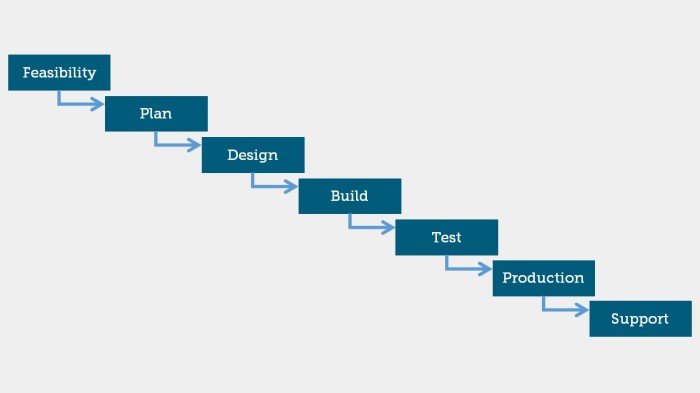
Waterfall Project Management

When you complete each stage of a project in isolation. You can’t move onto the next stage until the previous one has been completed.

Teams may have frequent meetings in the form of monthly boards, where decisions are made by stakeholders, or dial in meetings with team members who may not work in the same office location (e.g. a Tester who works offshore).

waterfall-project-management.jpg
Waterfall Methodology

A project example would be upgrades to multiple interlinked computer servers. Server one must first be upgraded first before server two can be looked at.

Pros

  • Methodical and the traditional method of running projects.
  • Works well for projects where there’s one end goal and nothing in between.
  • Enables clear investment decision points and reviews at stage ends and also ensures everything is completed before progressing to the next stage.
  • (Pro or con!) results in stricter levels of governance as projects need to fulfil specific criteria before being allowed to develop and implement.

Cons

  • Slow. A hold up at one stage affects the rest of the chain for the project.
  • This also includes potential impacts on dependant projects who rely on other projects for meeting their deadlines.
  • This in turn can lead to resource inefficiencies, project overspend and failure to meet to time scales.


SELRES_18becb00-8b2c-49eb-bb78-305b4e1cf3bdSELRES_a42bbdd4-aaaf-44c1-801a-95ab1f7d3246SELRES_a92ed792-ef54-4bda-9325-efc9bfdaab93AgileSELRES_a92ed792-ef54-4bda-9325-efc9bfdaab93SELRES_a42bbdd4-aaaf-44c1-801a-95ab1f7d3246SELRES_18becb00-8b2c-49eb-bb78-305b4e1cf3bd Project Management

Instead of aiming to complete whole stages in isolation, Agile projects take a more cyclonic approach, tackling a project delivery in multiple smaller stages (or sprints). Sprints tend to last between two and four weeks.

Teams keep each other informed via stand up Kanban/scrum meetings. An appointed scrum master leads discussions to enable the different teams working on the project provide updates. A) with what they are going to tackle during each sprint (at the start), B) progress updates (during) and C) what they have achieved (at the end). Meetings tend to be more informal and visual compared to Waterfall and the use of whiteboards with post its and/or dedicated software are adopted more frequently to enable updates in a quicker paced project.

Agile-Development-diagram_03.png
Agile Project Methodology

An example of an Agile project would be the development of a App. Over the course of multiple sprints teams are able to gradually build and test the App, first with the basic code, then the functionality, then finally adding in user appeal – pictures, sounds etc.

Pros

  • Fast moving. Enables teams to quickly identify any faults and either fix or ‘drop’ them before too much money and time is invested.
  • Deliveries grow over time, a project leader can start to see formation much earlier into a project, where in Waterfall the change is sudden.
  • Considered to be a more resource efficient model and allows for greater collaboration.

Cons

  • Agile is not a suitable method for all projects. A single delivery can’t be built over time (for example, the delivery outcome ‘running a marathon’ cannot be done in separate sprints. You sign up, train, then run it. An Agile approach would be useless in this instance – you cannot gradually run bits of the marathon over twelve weeks!)
  • The working environment must contain all persons on the project (project lead, governance, software architects, testers, accountants, etc.) to enable collaboration. These resources can only be dedicated to one project or sprint. If resources are split between multiple projects (as they can be on Waterfall) then the sprint may fail to meet its delivery.
  • As sprints are quite short and projects adopting Agile are quicker paced, the project lead must ensure that suitable investment and project governance/review points are put in place as the cycle system doesn’t naturally allow for any sudden or prolonged stops.
  • As it’s a new methodology of project working, team members may require additional support and/or training.


And there you have it. A (very) quick overview of the two main methods of running projects. I want to add here that I am by no means an expert on either approach, having only started a career in business project management and governance three months ago(!) but hopefully for that reason it will help any new starters in the world get to grips with the basics.

(Also, I hope that doing this will stop Mumma Bennett getting into hysterics when I talk about my job- ‘Waterfall? Ha, ha, haah! What’s Waterfall?! I don’t understand, what’s water got to do with technology upgrades? You’re so corporate!’ and so on and so forth…)


And who says you don’t learn awesome things from this blog?