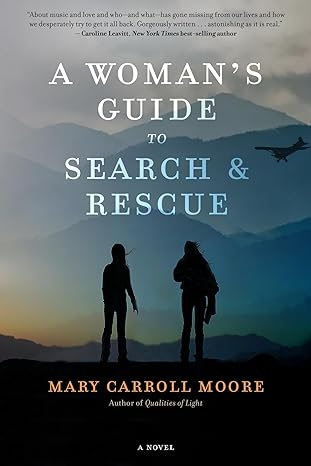
Fiction Review: “A Woman’s Guide to Search & Rescue” by Mary Carroll Moore

Rating: 3 stars

Headline: The story of one woman’s mission to rebuild relationships and clear her name

Review:

When the opportunity arose to review Mary Carroll Moore’s The Woman’s Guide to Search & Rescue I thought I was picking up a non-fiction title (having missed the small inclusion of “a novel” in the thumbnail’s footer). After realising my mistake I decided to continue reading, hooked by a dramatic opening scene featuring protagonist and indie rockstar, Red Nelson.

Shortly after crashing a stolen plane we learn of Red’s predicament. Framed for a violent attack she didn’t commit by the real perpetrator, longstanding criminal Billy Cotton, Red turns to her search and rescue pilot step sister, Kate Fisher and her daughter, Molly, for help. Their challenge is twofold, proving Red’s innocence and locking up Billy for good. However, as family tensions heat up and physical injuries take hold, it quickly becomes apparent there can only be one winner in this epic battle of cat and mouse and, when it comes to defeat, Billy is not a man used to losing…

The premise of this book is interesting, playing against the relationships of blended female generations who are linked by the same patriarchal figurehead. Personalities are distinct between the core characters and Moore does a great job in building tension and raising stakes within action sequences.

In A Woman’s Guide to Search & Rescue there is a lack of strong subplots to keep driving the underlying story of Red evading capture. The need of an additional storyline during the middle lull was particularly needed after the sudden appearance of Billy (an event that occurs earlier in the story than most comparative titles would normally address). This, as well as perhaps a few too many characters within the story, some of which appearing sporadically as means to unlock elements of the plot and little else.

A Woman’s Guide to Search & Rescue is worthwhile a read for those who enjoy stories featuring intergenerational relationships. Moore’s talent as an author shows in the writing quality and scene setting which are well executed throughout. However, in this case, it is the pacing of the story itself that would make me more prescriptive with the type of reader I recommend this title to.

AEB Reviews

Links:

Reedsy Discovery Review: AEB Reviews – “A Woman’s Guide to Search & Rescue” by Mary Carroll Moore

Purchase Link: “A Woman’s Guide to Search & Rescue” by Mary Carroll Moore (Amazon)

Author Website: Mary Carroll Moore | Author and Artist

**

Could you spare a dollar to support me? Donate here!

Alice’s Funding Page

Poetry Review: “How to Monetize Despair” by Lisa Mottolo

Rating: 5 stars

Headline: How to Monetize Despair: I don’t know how Mottolo does it, she just does.

Review:

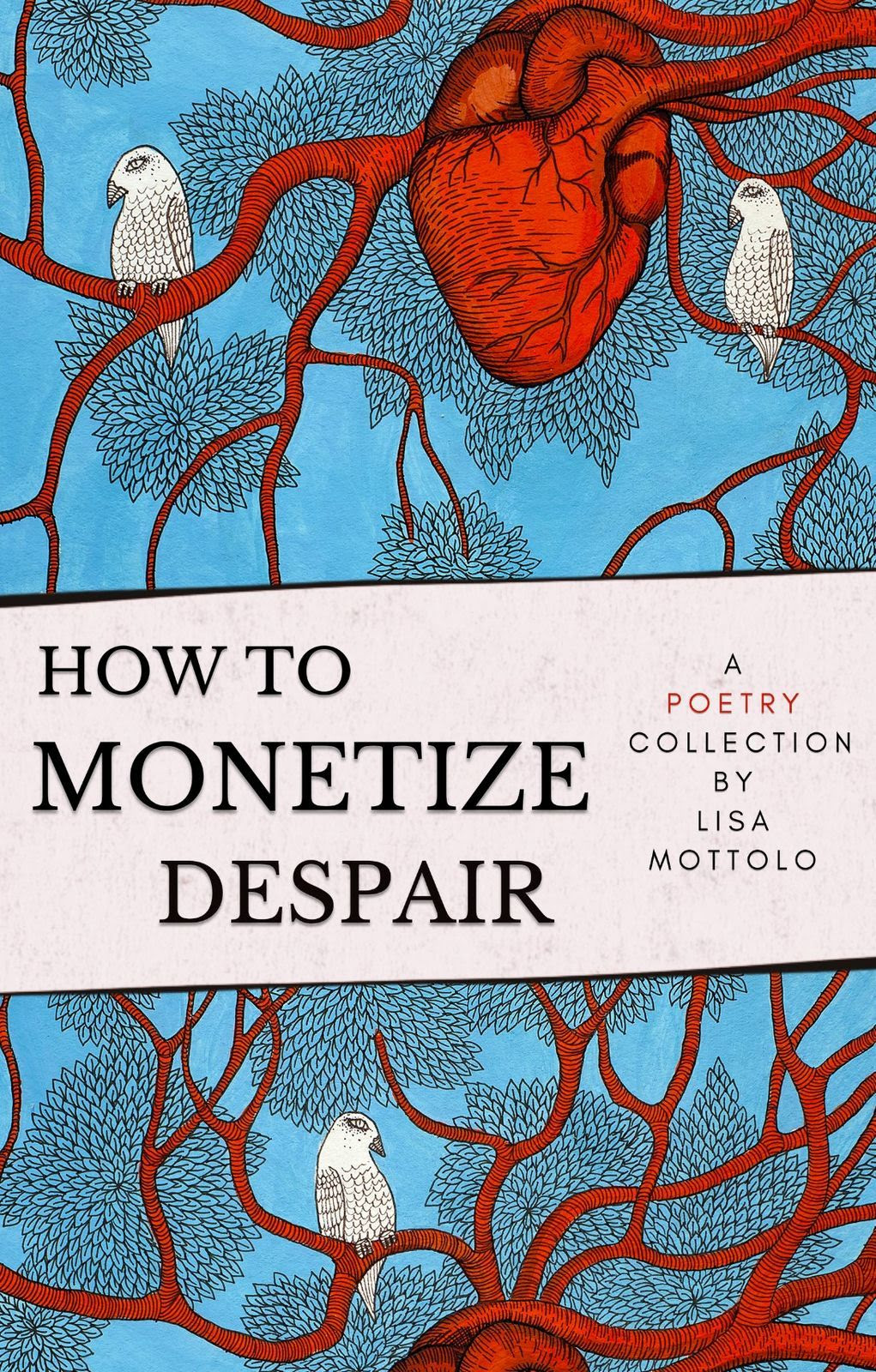
Before I have even turned the opening page of How to Monetize Despair I somewhat know this is going to have me hooked. With an intriguing choice of title and dramatic cover imagery, Lisa Mottolo’s poetry collection is one which marks itself as bold and unapologetic from the get go. Those of a sensitive disposition should step aside now.

In just under a hundred pages, this collection provides readers with an assortment of stanza-led poetry and monologue segments, divided into three segments but overall covering the key milestones of grief, from the initial shock trauma to forming new pathways in life. In one poem titled “We Only Speak Well of the Dead”, Mottolo inserts feelings love and compassion expressed in the wording against a title backdrop of dry humour (in this case, the observation that so often death blesses one’s legacy with a celebrated status which the deceased are unable to appreciate). It is a slightly twisted view of the world, but one which feels clever and, like much of Mottolo’s poetry, one you need to read for yourself to truly appreciate.

The monologue excepts of writing are monolithic, taking up to a page with the author intentionally leaving the copy as one lump of solid text. It forces the reader to tackle the content in one go, or else face losing their place in the text altogether, however once you adopt the differing approach to reading you are greatly rewarded with beautiful imagery and ideas on the meaning of life that for better or worse will haunt you long after you have finished reading.

How to Monetize Despair makes for a strangely captivating read. It is hard to put into words how Mottolo does it, she just does. In truth the only way to fully understand this poetry collection is to read it for yourself, do that and then we can talk.

AEB Reviews

Links:

Reedsy Discovery Review: AEB Reviews – “How to Monetize Despair” by Lisa Mottolo

Purchase Link:How to Monetize Despair” by Lisa Mottolo (Amazon)

**

Could you spare a dollar to support me? Donate here!

Alice’s Funding Page

Book Review: “The Glass Angel” by Christina Foxwell

Rating: 3 Stars

Headline: Merging fiction and memoir, Foxwell’s self-help guide is insightful in places but muddled in others

Review:

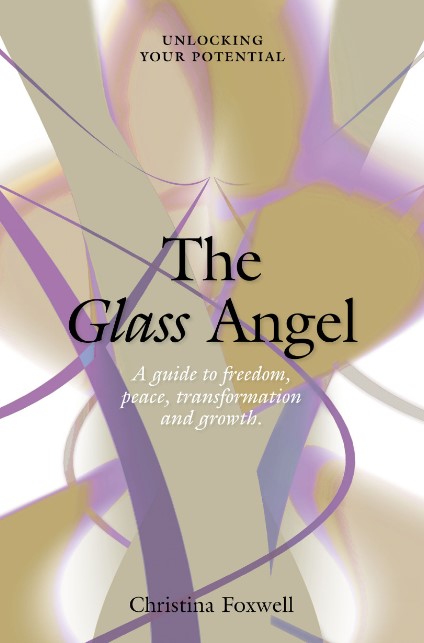
The Glass Angel is a book of three Acts. In the first, author Christina Foxwell presents a fictional tale of a glass angel who experiences hardship after she damages her wings in a storm. Immediately following this comes Foxwell’s revelation that the glass angel in her short story is a metaphor for her own traumatic experiences growing up in a strict Cristian community during South African Apartheid, including her abusive marriages and challenge of being a single mother. The third and final act introduces self-betterment activities for readers including how to turn negative “moth thoughts” into positive “butterfly thoughts”.

This book pitches itself as an informative self-help guide, yet the opening third, with fictional tales of fantasy and magic, is bewildering (pun not intended). My honest thoughts while reading this section were why is this story here and why am I reading it? A short story through and through, “The Story of Alchemy and Transformation” reads like a bolted-on piece of copy which should have been published separately. Compare this to the autobiographical element of this book, which contains by far the best content for its ability to draw at raw emotion, and it is easy to identify where Foxwell’s skills truly lie.

While some chapters could have been tightened with the assistance of a professional editor, others were desperately lacking. So much more could have been expanded on Foxwell’s personal relationships with friends, her domestic servant and even the church. This would have come into its own in helping highlight the fallout that came following the separation with her first husband, the protection and safety those secondary relationships offered. It impacts on the rest of the book; you almost feel cheated when areas are skipped over in haste, almost as if Foxwell would rather not dwell on certain topics and move swiftly onto the author/reader exercises towards the end of the book. As a result, there is a sense of lacklustre to complete the activities on the reader’s part, like being hurried into the giftshop of a tourist attraction thirty minutes before close.

The age old phrase goes “write what you know about” and in this instance Foxwell would have done so better by herself and readers to have sold us a hard-hitting memoir of her triumph over adversity, not a self-help guide.

AEB Reviews

Links:

Reedsy Discovery Review: AEB Reviews – The Glass Angel

Purchase Link: The Glass Angel by Christina Foxwell (Amazon)

**
Could you spare a dollar or two? Donate here!

Alice’s Funding Page

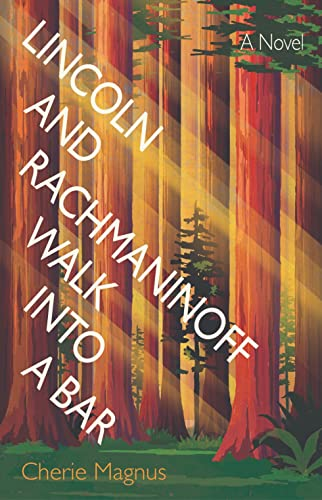
Book Review: “Lincoln and Rachmaninoff Walk Into a Bar” by Cherie Magnus

Rating: 1 star

Headline: In attempting to drive home a serious message about climate change, this short story feels a bit flat

Review:

Lincoln and Rachmaninoff Walk Into a Bar by Cherie Magnus is a short fantasy, following the adventures of an unnamed narrator as they race across America to save the world from the perils of forest fires and climate change. Their quest is supported by a cast of comrades living and dead, notably including former American president Abraham Lincoln and the Russian-American composer Sergei Rachmaninoff.

As far as plotting is concerned, this is not a particularly well thought-through book. The overall premise of Lincoln and Rachmaninoff Walk Into a Bar is somewhat questionable and the triggering incident is not introduced until about halfway through the story. This comes after a succession of scenes where characters talk about their past achievements while trying to comprehend modern technology in the 21st Century. Only when a spiritual figure appears to inform Rachmanioff and Lincoln they are to compose and write the lyrics for a song to save the planet does the story start to develop a sense of pace. It is a plot that is never fully realised, at least not in a way that provides a satisfactory conclusion.

The first person narrator’s statement in the opening lines that they had a dream they met Lincoln and Rachmaninoff rather sets the tone for the rest of the book. The dream statement is touched upon several times in the story, yet there is no moment of “and then I woke up”, leaving readers to guess for themselves the blurred lines between what could be reality and what could be a dream sequence. Is the whole story a work of character imagination?

The book has a lot of grammatical and spelling mistakes and the overuse of unnecessary adverbs becomes very grating, very quickly. There is also a strange subplot in the story where Destiny, a music student, and Lincoln strike up a flirtatious relationship. This part may have been intended as comedy but instead it feels more uncomfortable than funny.

The intended climate change message of Lincoln and Rachmaninoff Walk Into a Bar is lost in its poor execution. It is not to a high enough standard to recommend it to other readers, even if the historical research is commendable.

AEB Reviews

Links:

Reedsy Discovery Review: AEB Reviews – “Lincoln and Rachmaninoff Walk Into a Bar” by Cherie Magnus

Purchase Link: “Lincoln and Rachmaninoff Walk Into a Bar” by Cherie Magnus (Amazon)

**

Could you spare a dollar to support me? Donate here!

Alice’s Funding Page

Book Review: “The Golden Apple” by Mika Mathews

Rating: 2 stars

Headline: With too much head-hopping and an overuse of confusing metaphors, The Golden Apple missed the mark for me

Review:

The Golden Apple by Mika Mathews is the second book in the young adult, Fantasy, series “Oaths of Dante”. The story follows on from The Silver Coin with the protagonist, Dante, awakening to find himself transformed into a wolf. Seeking out the famed golden apple to restore peace and balance to the world’s magic is no small task, but accompanied by a gang of accomplices and the magic of Gaia pulsing through his veins, Dante is ready to tackle the next challenge in this thrilling quest.

There are likeable elements of this book. The personality traits of each wolf character certainly help to make the story more colourful; Dante’s sexuality and the character of Cypress (as just two examples) adds needed diversity into the story in a way which is reflective of the wider world we all live in. More of this, please!

The Golden Apple‘s biggest weakness is in its execution of narrative voice. The book is written in third person omniscient (as a reader we see everything taking place at any given time, as if were were a god-like figure). The story’s primary focus is on Dante and his hunt for the golden apple, yet there is so much head hopping it soon becomes incredibly hard to form a relationship with any of the characters. Really the author should have tackled this book in close third person, focusing specifically on Dante’s inner dialogue, feelings and reactions, and blocking out those of all others.

There are also a number of expressions didn’t quite hit the mark for me. Expressions such as “unbearably beautiful laughter” and “Gaia’s majesty flowed through her…subtly and with great love”. There are a lot of them throughout the book and in the vast majority of cases they come across as one liners that may have sounded good in the author’s head but less so for readers.

In truth this book may have been better if it had been merged with either the first or third book in the “Oaths of Dante” series. At only 121 pages long the word count is a bit slim for the expectations of this genre. With strict editing (ideally from an experienced professional) The Golden Apple could shine as a secondary plot of a bigger story arc, however right now it is not something I will be rushing to read again.

AEB Reviews

Links:

Reedsy Discovery Review: AEB Reviews – “The Golden Apple” by Mika Mathews

Purchase Link: “The Golden Apple” by Mika Mathews (Amazon)

**

Could you spare a dollar to support me? Donate here!

Alice’s Funding Page

Book Review: “Places We Left Behind” by Jennifer Lang

Rating: 4 stars

Headline: Places We Left Behind relates the complex relationships of those who dwell in the greys of religion

Review:

Places We Left Behind is the autobiography of Jewish-American author Jennifer Lang. Skipping swiftly over the first eighteen years of her life, the book picks up Lang’s story in Israel, meeting the charming Frenchman Phillippe for the first time. What follows is a 140 page rollercoaster as Lang navigates the tricky line between the religious faith and living a seemingly ordinary existence as an American citizen, culminating in Lang having to make a significant decision, one which will affect the very core of what it means to be a Jewish woman in the twenty-first century.

This book has many likeable qualities, not least Lang’s ability in capturing emotion in a way that is both direct and to the point. Where many authors would skirt over details or shy away from exposing themselves to the reader, Places We Left Behind makes it clear that no matter the romanticism, no relationship is smooth sailing. Even those grounded in a mutual connection of faith and religion can so easily hit turbulence. Lang’s words demonstrate these challenges, placed alongside those who do not fully understand what it means to hold religion as a cornerstone of family life.

Lang’s memoir is dotted in places with poetic excerpts, possibly to add emphasis. Within Places We Left Behind, these were a somewhat distracting, especially after reading long spells of traditional prose formatted in conventional paragraphs. It might be others enjoy the sudden change, but personally it does not hold enough significance versus if they had been written in conventional prose instead.

Places We Left Behind is a interesting memoir for anyone living within, or wanting to better understand, day-to-day Judaism. For those who see faith as black or white, purist believer or not, Places We Left Behind shows us the complex relationships of those who dwell in the grey.

AEB Reviews

Links:

Reedsy Discovery Review: AEB Reviews – “Places We Left Behind” by Jennifer Lang

Purchase Link: “Places We Left Behind” by Jennifer Lang (Amazon)

Author website: israelwriterstudio.com

**

Could you spare a dollar to support me? Donate here!

Alice’s Funding Page

Book Review: “How to Write a Business Plan” by Alessandro Bolasco

Rating: 3 stars

Headline: An informative guide for those with pre-existing knowledge of the corporate world

Review:

I cannot count the number of times I have sat through episodes of the television show “The Apprentice” with my head in my hands. Speaking specifically on the British version, the series routinely includes a particularly challenging episode where prospective investment candidates undergo multiple gruelling interviews where inevitably everyone’s business proposals gets ripped to shreds. Watching through my fingers, all I can think is “do these people even know what a business plan is?”

I have these toe-curling scenes playing in my head as I reach for How to Write a Business Plan. A fellow British national, Alessandro Bosasco even refers to the television show “Dragon’s Den” (the UK version of “Shark Tank”) as another example of people being very publicly grilled before deciding whether or not to invest in a start-up business. This book is intended as an antidote to the condition of poor planning, a no-nonsense guide to writing a business proposal from calculating turnover projections to the basic structure of what a business plan should follow.

This is informative book is assisted by a large number of illustrative spreadsheets and screengrabs, produced for a fictional case study (a business in the catering industry). While there is a lot to digest here…there is also a lot to digest here! Personally I found it difficult to read and interpret the spreadsheets and data sets, having to scroll back and forth between pages to interpret the wording in bulky paragraphs and match it with the visual content. While the portrait orientation of books can be space limiting (especially for Excel spreadsheets), it can be equally difficult to interpret on a digital device when the same images are flipped horizontally.

Good for those already possessing a level of business acumen, more fresh-faced readers may struggle when it comes to How to Write a Business Plan. Another level of granular detail, annotated images and breaking down the workings out between certain figures would have made it more accessible. With a few revisions I can see this being a highly popular guide in future editions.

AEB Reviews

Links:

Reedsy Discovery Review: AEB Reviews – “How to Write a Business Plan” by Alessandro Bolasco

Purchase Link: “How to Write a Business Plan” by Alessandro Bolasco (Amazon)

Author Website: https://www.bolasco-consulting.com/

**

Could you spare a dollar to support me? Donate here!

Alice’s Funding Page

Book Review: “The Truth About Melasma” by Janett Juwien

Rating: 5 stars

Headline: All the best parts of an extended internet search, rolled into one handy to use guide

Review:

Science has come a long way in recent years when it comes to the treatment of illness and disease but, needless to say, it still has a long way to go yet, not least with conditions that disproportionately affected women and girls. As someone who has been diagnosed with endometriosis, I very much know the feeling of being lost in the Wild West of that prescriptive medicine can offer.

Janett Juwien, a trained cosmetic scientist, aesthetician and owner of both a bachelor of science and multiple renowned beauty salons in Germany and Australia has turned her years of expertise into writing in her new self-help guide, The Truth About Melasma. Melasma is a skin condition that affects skin pigmentation, usually on the face and, in the majority of cases, women (although it is worth noting about 20% of those with the condition are male). In this handy guide that comes in at just under 200 pages, Juwien analyses both the causes of the condition and the treatments that can help alleviate symptoms. This includes not only medicated options but also lifestyle changes and vitamin supplements that are cheap and readily accessible.

There is a lot to like with this book. It is highly visual, with colour illustrations and tables to bring to life some of the dryer facts and figures. Coming from a very much non-scientific background I have to take the book’s guidance on face value, however every single assertion made in The Truth About Melasma is fully supported with research footnotes that provide the ability to conduct independent research. That, coupled with the author’s own scientific knowledge and experience provides a needed dose of reassurance to any reader.

This guide feels like all the best parts of an extended Google search on Melasma, rolled into one handy to use guide. That considered, The Truth About Melasma is something I would recommend to anyone, male and female, who suffers with this skin complaint. With some of the guidance in this book, you cannot go far wrong.

AEB Reviews

Links:

Reedsy Discovery Review: AEB Reviews – “The Truth About Melasma” by Janett Juwien

Purchase Link: “The Truth About Melasma” by Janett Juwien (Amazon)

Author Website: Ecvilibria – Holistic Beauty Confidante

**

Could you spare a dollar to support me? Donate here!

Alice’s Funding Page

Book Review: “Following the Boar” by Matthew Howard

Rating: 2 Stars

Headline: Too much in too few words: this short story is wounded by its lack of descriptive text

Review:

Matthew Howard’s story Following the Boar: An Ancient Historical Fiction Short Read (hereafter Following the Boar) is a short read and to the point. It tells the story of Borvo, a Scottish warrior, who must prepare for battle against a strange and fearsome enemy who has been massacring the local population and invading lands. As the clan travels toward the battlefield, Borvo and his father rally additional comrades to join the fight, including warriors who swear allegiance to his uncle, Breenus. Together the combined forces travel on in a climatic battle with the enemy of steal.

The main problem I have with this short story is in the quantity of content. In Following the Boar, the author, Howard, has attempted to pack in far too many events into too a short space of time, at the detriment of the descriptive text. Reading through this story I get no sense of place and I struggle to follow the movements of the characters. It is impossible for me to visualise the appearance (and number) of warriors coming from the different fractions; so much focus is made on the three central characters I kept forgetting they were there until suddenly they appear on the battlefield. The protagonist Borvo has no development; even in short stories the reader needs strands of insight to help flesh out the image of the main characters, their personality, drivers and beliefs. Sadly there is none of that here.

One example – the story starts with Borvo waking up on the floor. Why is the protagonist sleeping on the floor? His father is the chieftain of the clan, he even asks his son about his “first taste of poverty”, so what was the cause to place Borvo in humble surroundings?

Without the essential sprinklings of insight and description, it is hard to comprehend why characters make the choices they do and the reader is left feeling disengaged with what limited action takes place. When the ending occurs, somewhat abruptly, it leaves for only feelings of dissatisfaction, as opposed to clamouring for more.

Howard should take this short story as a pause for reflection. The existing story arch would make a good basis for a historic novel or, with elements removed, could be refined into a succinct short story. Improvement needed, but within the muddy battlefield there are glimmers of potential.

AEB Reviews

Links

Reedsy Discovery Review: AEB Reviews – Follow the Boar: An Ancient Historical Fiction Short Read

Purchase Link: Following the Boar: An Ancient Historical Fiction Short Read (Amazon)

**

Could you spare a dollar or two? Donate here!

Alice’s Funding Page

Book Review: “Intuitive Tarot 101” by Claudia Amendola Alzraa

Rating: 4 stars

Headline: Destiny is on the cards in this simple to navigate guide to Tarot reading

Review:

About six years ago I went through a phase when I was obsessed with reality TV. During an episode of “The Real Housewives”, one of the women invited a practitioner into her house to perform Tarot card readings. I was fascinated by it (less so by the women, who for the whole five minute segment, wouldn’t stop screaming).

Intuitive Tarot 101 would have been perfect for me back then. Written by Claudia Amendola Alzraa, who herself proudly boasts years of extensive Tarot reading experience (starting back when she was twelve years old), this guide aims to give its audience an introduction to the basics of Tarot card reading. Built specifically on the Rider Waite style of card design (the most popular style used by readers), Alzraa opens with a clear set of objectives. These include (but are not limited to): learning the foundation of each card and the hidden symbolism in each, trusting intuition and building those all important reading skills. The book takes readers on a journey to explain the process of Tarot reading (aka “the journey of The Fool”), accumulating in a frequently asked question section towards the end, where the author addresses some of the finer points around the act of Tarot reading (e.g. knowing when and how much to charge clients for services offered).

This is a straightforward guide, with comprehensive tables used to break down the symbolism of each card in a clear and direct manner. At just under a hundred pages in length it really is the definition of a ‘introductory 101’ for new joiners to the world of Tarot. The nuance around symbolism would have benefitted with accompanying visuals, as the book makes the assumption that anyone reading it will already owns a deck of Rider Waite cards.

A nicely packaged guide overall and an interesting area of spirituality I enjoyed reading on. That said, I don’t see The Real Housewives trying to book me for their Tarot readings anytime soon.

AEB Reviews

Links:

Reedsy Discovery Review: AEB Reviews – “Intuitive Tarot 101” by Claudia Amendola Alzraa

Purchase Link: “Intuitive Tarot 101” by Claudia Amendola Alzraa (Amazon)

**

Could you spare a dollar to support me? Donate here!

Alice’s Funding Page