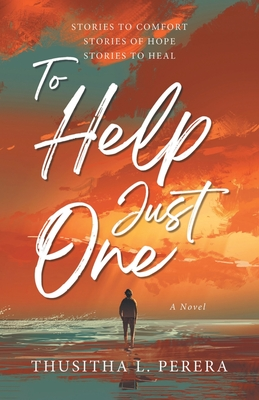
Book Review: “To Help Just One” by Thusitha L. Perera

Rating: 3 stars

Headline: To Help Just One demonstrates courage in its ability to speak up about sensitive topics many authors shy away from

Review:

To Help Just One is the debut release from Australian author Thusitha L. Perera, who turned to storytelling while recovering from the long term effects of Covid-19. The book follows the intersecting stories of Lawrence, Jonathan and Tegan, three childhood friends who have grown up to become work colleagues and exercise buddies. Going through their various challenges in life, we get to see how each character navigates mental health issues, including themes around gambling addiction and workplace bullying. On occasion the tone might be triggering for those sensitive to these topics, however overall this is a story of personal resilience and triumph and the importance of supportive networks. If this book could be described in one mantra it would be “it’s always okay to not be okay”.

Despite some of the thorny issues presented in the book, To Help Just One has a nice feel about it, it flows well and each character has a coherent story arc that reaches a satisfactory conclusion. It is very prose heavy, dialogue is deployed on a minimalistic level compared to what would normally be seen in this type of fiction. Personally, I was a bit on the fence with whether I liked the approach, as at points it did encourage me to skip segments knowing that what would follow would be a page of internal reflection with little action.

The biggest hold-back to the writing comes from not heeding the age old writing wisdom of “show don’t tell”. Perera states things a bit too often that it tends to give the feeling of being spoon-fed a story. “Tegan is excited”, “Tegan marvels at the range of skills”, “[Tegan] considers what adding another string to her bow would look like”, “Tegan likes the idea of coaching” (and this is just on page seventy). While it is not a crime to shed a light on areas readers cannot see, when lots of successive paragraphs open the same way the format can become repetitive. What is lacking is the subtle depth that allows readers to flesh out details for themselves, without being directed by the author.

This is a book I am glad to have read, not least for its courage to speak up about some of the hot topics many authors shy away from. To Help Just One has strong foundations as a author debut and I look forward to seeing where Perera takes his writing career next.

AEB Reviews

Links:

Reedsy Discovery Review: AEB Reviews – “To Help Just One” by Thusitha L. Perera

Purchase Link: “To Help Just One” by Thusitha L. Perera (Amazon)

Author Website: https://fromthedeskoftlperera.com/

**

Could you spare a dollar to support me? Donate here!

Alice’s Funding Page

Book Review: “S.I.D” by Smiley TheWriter

Rating: 4 stars

Headline: A well written short story that engages with challenging conversations around mental illness

Review:

*Warning – book and review contains themes of death and suicide*

S.I.D (Suicidal Ideations) by Smiley TheWriter is a short story monologue, narrated by the voice of Samuel, a twenty-three year old Somalian living in America. (I will refer to the book as S.I.D and author as Smiley hereafter.) Split over the five themes of time, love, pain, tears and death, from within the afterlife Samuel reflects on his past experiences that have led up to the present day, moments after jumping off a bridge and committing suicide.

Given the sensitives around this topic, Smiley handles the content well. In places there are some really nice turns of phrase, for example Samuel’s description of a troubled childhood in Somalia where he is forced to eat sand and “passed around like an empty plate”. The chapters tackle different themes in a way that layers upon the last, creating a backdrop that builds progressively toward a thrilling climax of events. Being a short story S.I.D is perfectly suited to the sombre tone carried throughout, the feeling of a character who could have had many chances to shine but has been ground down by a failed system on both sides of the Atlantic.

While the wording is well constructed, the skill and poeticism of Smiley as an author does tend to create its own bubbles of confusion. The tone of voice is so personable, so intimate and in tune with Samuel’s thoughts, feelings and experiences, it is easy to forget this title is a work of fiction as opposed to an autobiographical memoir (excluding the opening sentences that convey the narrator is already dead). More description of characters’ physical attributes and world-building would have helped ground readers in the fictional landscape. The title may also be a little lost in translation. As a British reviewer, I would not have known the acronym S.I.D was a term or descriptor related to suicide.

The inclusion of an author epilogue and American support services at the back of the book are a nice touch, however I would still be a little cautious of sharing this book widely given its strong themes of death and suicide. That said, S.I.D still remains a well written short story that engages with challenging conversations around mental illness, especially within communities where is it considered taboo.

AEB Reviews

Links:

Reedsy Discovery Review: AEB Reviews – “S.I.D (Suicidal Ideations)” by Smiley TheWriter

Purchase Link: “S.I.D (Suicidal Ideations)” by Smiley TheWriter (Amazon)

**

Could you spare a dollar to support me? Donate here!

Alice’s Funding Page

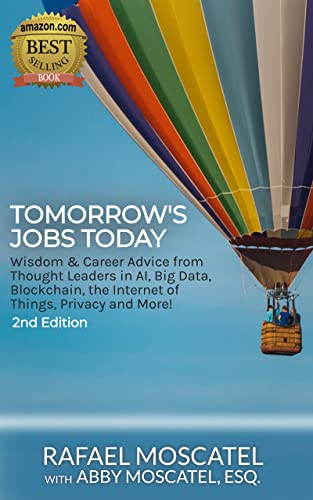
Book Review: “Tomorrow’s Jobs Today” by Rafael Moscatel

Rating: 3 stars

Headline: A guidebook for those considering a future career in digitally-focused sectors

Review:

Tomorrow’s Jobs Today by Rafael Moscatel (with support from Abby Moscatel) aims to lift the lid on job roles of the future career market. Example career paths covered in detail include Blockchain, Artificial Intelligence and Advisory Consulting. Each area has its own chapter, allowing for an in depth study which starts with a broad history and overview, details of expected starting salary and essential qualifications (where applicable) for entry. Interviews with well-seasoned experts in the field go a long way to providing a human insight into the industries they represent, the conversational tone helps massively to bring energy into the large bodies of text.

This book is clearly trying to capitalise on a younger readership base, those that are coming toward the end of their formal education and looking to making career path decisions. With that in mind, Tomorrow’s Job’s Today would have benefitted from being punchier and quicker to the point in places. There is no imagery or diagrams in this book, content which would have massively supported some of the more complex terminology or been useful as a springboard for some of the meatier paragraphs. While a useful statistic to include, the use of a dollar currency for expected starting salaries is also restrictive to an American readership base and are as accurate as the day the book is published. I would be a little nervous of expecting the figures to be accurate in a year or two, especially given the current volatility of global inflation.

This is a good book for anyone wanting a candid insight into a specific field of interest. With full credit to the authors, some of the specific areas of interest are not as simple to explain as stacking shelves in a warehouse (for what it is worth, Blockchain is complicated!) It remains an insightful guide for those wanting to enter a market that is becoming increasingly dominated by the internet and technology. That said, the humanity students in the room, or those seeking a career in mainstream corporate roles, you might want to sit this one out.

AEB Reviews

Links:

Reedsy Discovery Review: AEB Reviews – “Tomorrow’s Jobs Today” by Rafael Moscatel

Purchase Link: “Tomorrow’s Jobs Today” by Rafael Moscatel (Amazon)

Author Website: https://rafaelmoscatel.com/

**

Could you spare a dollar to support me? Donate here!

Alice’s Funding Page

**

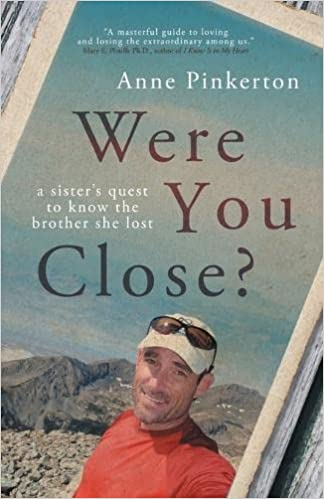
Book Review: “Were You Close?” by Anne Pinkerton

Rating: 5 stars

Headline: A sister’s journey to find herself within the ashes of what might have been

Review:

Imagine going about your daily activities when someone calls to say your a family member has been reported missing. Initially you think nothing of it, knowing this is someone you don’t have regular contact with, an experienced mountaineer with a thirst for adventure. As time goes on doubts start to sink in and then, several days later, the unthinkable; the discovery of a body.

Were You Close? by Anne Pinkerton is one sister’s reconciliation with the tragic loss of her older brother David, whose sudden death in 2008 shook the lives of her and her extended family to its core. Titled after the grinding repetition small talk with people offering sympathy, including the question “were you close?”, the starting place for Pinkerton’s book is in the memories of growing up as the baby sister of the family, half-sibling to older brothers David and Tommy. Memories of visiting David in his medical coat in a radiology department is spliced with the immediate aftermath of his death in equally clinical fashion. As the book progresses we see as the dust settles and the family come to terms with life beyond grief, Pinkerton herself begins to explore her own choices in life and her relationships with other members in her extended family.

Pinkerton’s combination of memoir and semi-biographical epic is beautifully executed in this book. It highlights the pain sudden and unexpected loss, alongside the struggles of being seen in a societal construct that tends to plant heightened concern over the wellbeing of spouses and children. Yet David had neither of those (although he did have a girlfriend). This book wraps itself around acceptance of the unknown and one woman’s journey to find herself through the ashes of what might have been with the brother she lost.

The writing quality in this book is exceptional and moving. The book moves at the right pace to ensure the right topics get more air time while others are briefly mentioned to cover the event itself and the ten years following. We are routing for Pinkerton when she decides to enrol on a Masters degree for creative writing, we feel her concern and frustration when a localised hurricane delays David’s memorial service. By the last chapter you will struggle to find a dry eye in the house. Nobody could have written this story better.

A cleverly positioned book for those who enjoy inspirational memoirs as much as emotionally charged ones, Were You Close? is the perfect companion for those cosy nights and a good cup of peppermint tea.

AEB Reviews

Links:

Reedsy Discovery Review: AEB Reviews – “Were You Close?” by Anne Pinkerton

Purchase Link: “Were You Close?” by Anne Pinkerton (Amazon)

Author Website: https://annepinkertonwriter.com/

**

Could you spare a dollar to support me? Donate here!

Alice’s Funding Page

**

Book Review: “Couch” by Misha Chinkov

Rating: 2 stars

Headline: As a memoir, “Couch” has an interesting premise but suffers from its poor execution

Review:

Couch follows the adventures of Misha Chinkov, a Russian national who between 2014 and 2022 took to couch-surfing during his national and international travels through Russia, the Baltics, India and the USA. In this book, couch-surfing refers to homeowners offering spare rooms, sofas, beds etc. for what is usually a heavily discounted price compared to a hotel room. It is particularly popular with young people and travellers.

What drew me to this book was its premise. The cover imagery of a neglected sofa and common interpretation of couch (or, in the UK, sofa) surfing is that it is more something brought about by hardship. It is not clear in this book what Chinkov’s motives are for couch-surfing, is it due to a lack of money or a desire to avoid hotels? The writing focus tends to be placed on the increasingly disturbing hosts, including an American called Richard who hosts exclusively foreign travellers and insists on making lodgers sleep naked, “as clothes damage the air mattress”. During scenes like these I find it hard to comprehend why our narrator is continuing to couch-surf.

Most of this book’s issues can be traced back to author voice. From the frequent spelling mistakes and poor grammar it is apparent that English is not Chinkov’s first language. Writing in another language is admirable but not forgivable. The F bomb is dropped excessively and Chinkov’s tone of voice is insensitive and bitter. Following a scene where, after been driven for an hour to Suzdal by his hosts, “I give the guys a hundred [rubbles], which can afford you nothing but a cup of tasteless coffee,” it is hard to feel sympathy toward Chinkov when he later struggles to find accommodation.

In one short book Chinkov crams in every couch-surfing experience, resulting in lots of fragmented sections that focus on brief interactions and leave readers starved of detail. What did the houses look and smell like? If India truly is “the land of dances and spice” then show us through words!

The premise could have potential if it were to be given a major overhaul and rewritten. Until then, Couch remains a questionable read, in more ways than one.

AEB Reviews

Links:

Reedsy Discovery Review: AEB Reviews – “Couch” by Misha Chinkov

Purchase Link: “Couch” by Misha Chinkov (Amazon)

Author Website: https://www.mishachinkov.com/

**

Could you spare a dollar to support me? Donate here!

Alice’s Funding Page

**

Book Review: “The Unconventional Entrepreneur” by Alexandra Nolan

Rating: 4 stars

Headline: The book that will make you want to start a business

Review:

Building on her experience in beauty and blogging, Alexandra Nolan’s publishing debut The Unconventional Entrepreneur tailors itself toward aspirational entrepreneurs. While most of the guidance is fairly universal, author perspective makes it that edge more applicable to those wishing to create home, beauty or fashion brands.

The first section of the book provides a potted autobiography of Nolan’s career from humble beginnings to overseeing her first retail store, The Ivory Boutique. The establishment of several online brands followed swiftly afterwards, including “City Chic Living”. Following this The Unconventional Entrepreneur moves into practical guidance on areas such as branding, balancing profit and cost and digital expansion.

The approach to writing in this book makes for a pleasant read, it is informal in style and dips into Nolan’s personal experiences where applicable. You get a strong sense that Nolan is well informed by her experiences and research, she knows her stuff and understands what it feels like to have insecurities and doubts, particularly as a female entrepreneur in a male-dominated subgroup.

In a couple of places points are a little laboured (in one case study Nolan references an example brand no less than seven times, to the point I cannot think of anything but The European Wax Centre!) Those who regularly read my reviews will also know of my dislike for content which encourages readers to visit websites, such as the QR codes featured in this book. I will say it again; authors, do not encourage readers to put your book down and get distracted on the internet!

The Unconventional Entrepreneur is unashamedly optimistic and proud, a thoroughly enjoyable read that I would readily recommend to any of my female friends considering entrepreneurship. Women who do not know where to begin or find themselves questioning their abilities. I hope this book will continue to make more woman feel as empowered and confident as Nolan is of herself.

AEB Reviews

Links:

Reedsy Discovery Review: AEB Reviews – “The Unconventional Entrepreneur” by Alexandra Nolan

Purchase Link: “The Unconventional Entrepreneur” by Alexandra Nolan (Amazon)

Author Website: https://citychicliving.com/

**

Could you spare a dollar to support me? Donate here!

Alice’s Funding Page

**

Book Review: “Mirage” by Leo Refay

Rating: 1 stars

Headline: A plot lacking in detail, set against unexplained parties and toxic personalities

Review:

At its core Mirage by Leo Refay is a tale of doomed love, featuring the archetypical femme fatale as instigator. It is hard to expand heavily on Mirage‘s plot, a story that centres around the relationship of Adam and Anna after a chance encounter at their place of work.

This could have been a good book. There is a fizzle of author passion and in select places the story does present intrigue, however fundamental issues make it ultimately read like a clunky first draft. Between Adam and Anna’s meeting on page one and the end of the book on page 173 there is limited character development. Adam consistently refers to Anna as his girlfriend, yet during a later outburst Anna reaffirms their platonic friendship. Are we to assume Adam is continuing to pour his heart (and wallet) to a woman showing no signs of physical affection?

Description is lacking; there is nothing to explain what Adam’s company does, we do not even know his wife’s name. Poor plot devices are used routinely to distract from sloppy writing. For instance, after a swift divorce Adam’s wife and unnamed children are dispatched “back to their [undefined] country”, writing them out of the story. No further comment is made of, or by, them. Maybe believable in an 18th century setting, but not 2020.

Anna is demanding, impatient and aggressive. The intention of Adam’s first person narrative is to portray Anna as the sole villain, yet all the characters display toxic tendencies. Adam is possessive and controlling, insisting on managing Anna’s investments and sitting in on her work meetings. Rose, a secondary female introduced later on, lacks boundaries, messaging Adam in an overly persistent and needy way. When Adam demonstrates a strong liking for Rose, they sleep together twice and he quickly moves on. There is no breathing space for any of the characters to reflect on their actions as they dart between luxury holiday trips and drunken parties.

Finally, and I do not know why I am particularly hung up over this, but everyone has two girls. Anna has two daughters, an older sister and two nieces. Adam has two unnamed daughters and Rose, the divorcee, has two children (which I would guess are girls). It is a point which perfectly illustrates the why a developmental editor is worth their weight in gold.

Unlike the majority of stories involving a femme fatale, there is no build-up of tension in this book. Adam and Anna hit the height of their negative attributes in the first quarter, leaving the author with nowhere to go other than circling around the same repeated scene of envy, anger, forgiveness. If Mirage had been in less of a rush to get to that point then maybe it would have faired as a better read.

AEB Reviews

Links:

Reedsy Discovery Review: AEB Reviews – “Mirage” by Leo Refay

Purchase Link: “Mirage” by Leo Refay (Amazon)

**

Could you spare a dollar to support me? Donate here!

Alice’s Funding Page

**

Book Review: “STEM Secrets for Interviewing” by Jeffrey Harvey

Rating: 3 stars

Headline: For the right reader there is some merit in having a quick flick through this guide

Review:

STEM Secrets for Interviewing by Jeffrey Harvey is an informative guide aimed at prospective job candidates, particularly those applying for roles within the fields of Science, Technology, Engineering and Mathematics (otherwise known as STEM subjects).

In an ever-changing world, Harvey argues that being proficient in academia is no longer a golden ticket to a high-flying career. Split across ten chapters, this guide explains some of the core employment competencies and guidance on how to answer related questions that could be posed at interview.

Harvey’s book is certainly extensive; with seventy-one different questions covered in a great amount of depth, readers are hardly left wanting from a lack of information. The content cleverly utilises real world case studies to highlight the damaging effect of negative core competencies in industry (for example the fatal design flaws in the Boeing 737 Max aircraft caused, in part, by a company mantra instilled into employees to put profitability before safety).

Where this book slightly loses sight of its aims is where the breadth of knowledge becomes more a weakness than a strength. To be somewhat blunt, the book is too long for its intended purpose. Harvey introduces this book as being something made for those applying for their first STEM role, possibly their first interview of any kind. With that in mind, we are to assume the target readership age is somewhere in the low to mid-twenties. When I was that age, I wanted a no-nonsense guide following a simple structure: interview question, model answer, interview question, model answer. What job applicants do not generally have time for are dense blocks of paragraph, including an introduction to the history of STEM subjects. Given the title of the book and the intended audience, this felt like needless words. The book needed to get to the point and much quicker.

Another point is the numbering of the questions. To state in the opener that chapter eight would outline seventy-one questions, only to then chunk them up into categories so that the question number never exceeds five, it makes it incredibly hard to refer back to a specific question.

There is some merit to this book and for the right reader possibly worthy of a quick flick through. Could I say it was more than that? That is probably another question to add to Harvey’s list.

AEB Reviews

Links:

Reedsy Discovery Review: AEB Reviews – “STEM Secrets for Interviewing”

Purchase Link: “STEM Secrets for Interviewing” by Jeffrey Harvey (Amazon)

**

Could you spare a dollar? Donate here!

Alice’s Funding Page

**

Book Review: “A History of Lithuanian Writers in the United Kingdom” by Aldona Grupas

Rating: 5 stars

Headline: Providing a spotlight on Lithuanian writers, this is a book I would love to have displayed on my bookshelf

Review:

As a born and bred British citizen, I simply could not help myself when the opportunity arose for me to review Aldona Grupas’s recent release A History of Lithuanian Writers in the United Kingdom (Hereafter A History of Lithuanian Writers). Before reading her work I did a cautionary bit of research online, discovering that in 2021 there were approximately 153,000 Lithuanians calling the United Kingdom home. For context, this is around the same population size as the Warwickshire town of Stratford-Upon-Avon (birthplace of William Shakespeare and, coincidentally, close to where I grew up as a child). From that you quickly understand the mindset which birthed this book, a thriving community with something to say and a determination to be recognised for it.

The book details nine Lithuanian writers, past and present, and how their work has contributed towards shaping prose and poetry within their native Eastern European country and in Britain. Each standalone chapter features an extract from each author’s portfolio of work, alongside a biography. The biographies are just as fascinating as the writing, highlighting the social and political factors which influenced their creative approach. At 88 pages it is a short and sweet read, easily digestible in one sitting.

In her introduction Grupas talks about A History of Lithuanian Writers being a passion project. It shows; you can tell a lot of effort, research and careful selection has gone into this title’s production. The quality of the translations alone are worthy of a five-star rating alone. Reading some of the beautiful poetry it is easy to be left in awe and wonder over creatives that are vastly unheard of within British literature.

A History of Lithuanian Writers is a delightful book, merging fact and fiction seamlessly. Grupas and those who have contributed should feel incredibly proud of their hard work and efforts. It samples a diverse range of talent in a way which leaves you begging for more. An important reminder of the importance of reading widely and broadly beyond borders, this is a book I would love to have displayed on my bookshelf. When it comes to understanding the world “Mokėti vieną kalbą neužtenka” (“knowing one language is not enough”).

AEB Reviews

Links:

Reedsy Discovery Review: AEB Reviews – “A History of Lithuanian Writers in the United Kingdom”

Purchase Link: “A History of Lithuanian Writers in the United Kingdom” (Amazon)

Author Website: https://albionartclub.co.uk/

**

Could you spare a dollar to support me? Donate here!

Alice’s Funding Page

**

Anna Beer on the female greats literature forgot

The evening before seeing historian and author Anna Beer I’m sat at home, drafting a book review. Most of my reviews are for self-published titles, books where authors need the extra push to help them up the rankings. This particular book is a self-help guide for women navigating the menopause. It’s really good, certainly one of the more informed guides I’ve read in recent months. I finish typing my conclusion, knowing I’ll return to this review at least twice more to make edits before uploading it onto Reedsy. In that moment life feels good.

Barely 24 hours later…

“If I have to read another book on the menopause I’ll throw it across the room!”

It’s a statement that says a lot about the personality of this speaker, a strange mix of fire and frustration blended with ease and informality. Anna Beer has made her entrance.

Beer’s newest publication, Eve Bites Back, puts forgotten female authors front and centre of her historical research. Women like Mary Elizabeth Bradon, who wrote Lady Audley’s Secret in 1861-2 as a serialised publication for sixpenny magazines. She wrote the first instalment in just one evening. Such as the power of her words, when her original publisher ceased trading, another stepped in to print the remainder of the book. Bradon was a household name of her time, a literary celebrity, yet for every hundred mentions of her contemporary Charles Dickens, nowadays you will struggle to find one of Bradon.

Beer pauses for breath, taking only the slightest sip of tap water from her glass. The plight of Bradon isn’t the body of Beer’s argument, quite the reverse, the historian is only just warming up.

Bradon’s fate is not only applicable to the female authors of books, Beer argues. Another example, the poet Emilia Lanier (née Aemilia Bassano) also spent a good portion of her life swimming in the same pool as other masterful contemporaries. A 16th Century creative living in London, Lanier would have known fully of the playwright William Shakespeare, it is believed she was even mixing in the same aristocratic circles as him (although less known about whether the pair ever met).

Lanier was 42 years old when she published Salve Deus Rex Judaeorum, a poetry collection highly praised by all genders, even with its undertones many would now regard as feminist leaning. And yet, once again, in the 21st Century relatively little is known of Lanier. Why? Because, Beer argues, Lanier simply didn’t have the same number of influential promoters as Shakespeare.

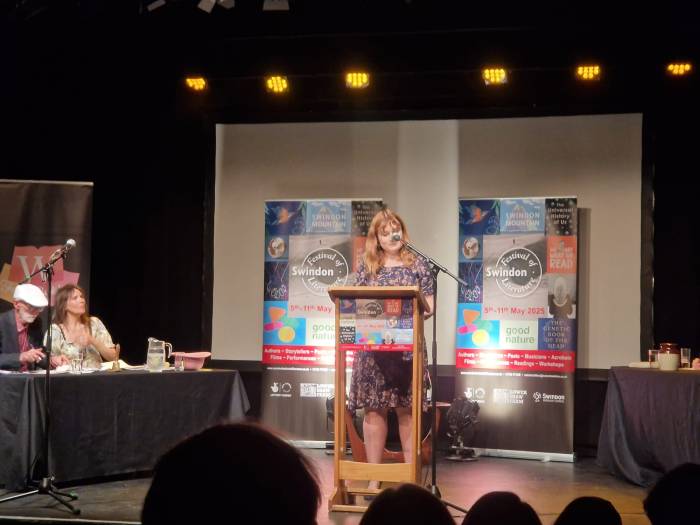
Beer smiles, one hand gripping the podium, the other pushing a strand of hair behind her ear. She’s hit her stride, that juicy zone when academics become unstoppable, overwhelming charisma tinged by a slight arrogance. They know they’re right and you can’t help but nod along. Beer rattles through woman after woman, their names piling up like endless bodies cast below the stage we sit before. If she carries on at this rate the whole auditorium will be drowned before the hour is finished.

“I must mention Lady Mary Montague,” she adds between breaths, “oh, and someone ask me about Anna Wickham if there’s time!”

Watching her recount all these unknown literary greats, it makes me both proud and embarrassed to be a woman. Society imprinted on me many of Britain’s literary greats, only now am I realising that all of them just so happened to be white men. If anything Beer’s work proves that there were more female authors out there than can be feasibly brushed under the carpet.

The evening draws to a close and with the round of applause comes a sudden longing for a fresh air. The auditorium at the Swindon Arts Centre empties and, not realising quite how hot I’d become inside, I’m relieved to be sucking in a large mouthful of cool spring air.

Within minutes of getting home my laptop is thrown open and a multitude of female names punched into my search engine. The internet crashes momentarily, I hit refresh multiple times, forcing it on until the algorithm finally caves in to my demands. The more I search the more I’m left wanting and by the end of the night I have an Amazon basket filled with books, not one of which written by a man.

To hear Beer talk so energetically on her book Eve Bites Back and wider literary feminism fills me with optimism for what this field of study can offer us all. Knowing that it took Jane Austen twenty years to convert her thoughts into a recognised publication is also enough to keep my own creative aspirations alive. (Although for what it’s worth, I won’t be forwarding Anna Beer a copy of my menopause book review anytime soon.)

Image credit: Wyvern Theatre

Previous Swindon Literary Event write ups from AEB:

**

Could you spare a dollar to support me? Donate here!

Alice’s Funding Page

**